Butternut Squash Pie
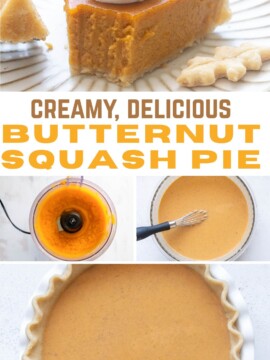
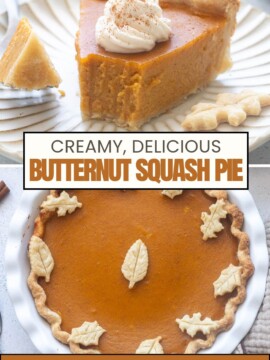
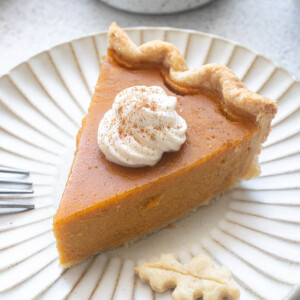
This Butternut Squash Pie is a delicious twist on classic pumpkin pie! It’s made with homemade roasted butternut squash purée, pure maple syrup and warm spices, and it’s baked in a buttery, flaky pie crust. It’s rich, creamy and the perfect Thanksgiving dessert!
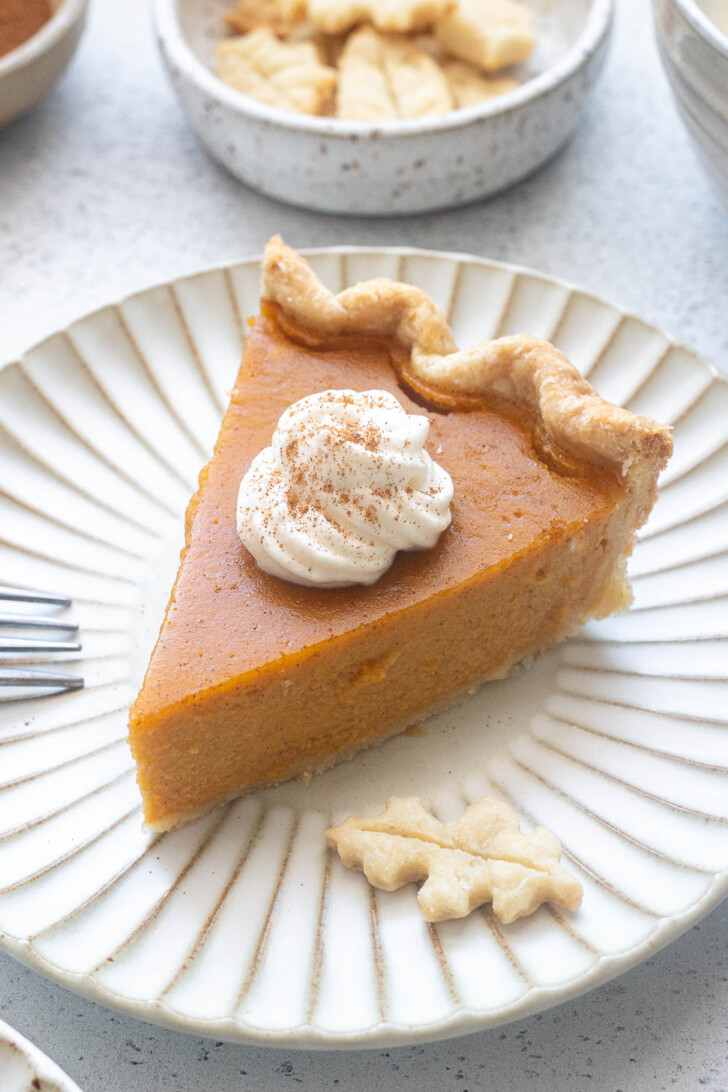
I’ve always told my family that it’s not Thanksgiving without pumpkin pie. I have to have it, no ifs, ands or buts about it.
This Butternut Squash Pie, however, could change everything. It’s so close to pumpkin that most people probably wouldn’t know, but it definitely adds a naturally sweet, nutty flavor that I love.
Butternut squash is one of my favorite fall ingredients, and while I usually use it in savory recipes like mashed butternut squash, its flavor makes it perfect for dessert, too.
Roasting the squash brings out its sweetness, and when it’s combined with maple syrup, warm spices and half-and-half, it creates the most delicious, silky smooth filling. I used maple syrup in my chai spiced pumpkin pie, and I loved the results!
I love that I can serve this pie on Thanksgiving without shaking up tradition too much. I’m the hard sell in the family, and I’m definitely on board with it. 🙂
Be sure and take a look at my collection of Thanksgiving recipes for more made from scratch dishes!
Why you’ll love this recipe
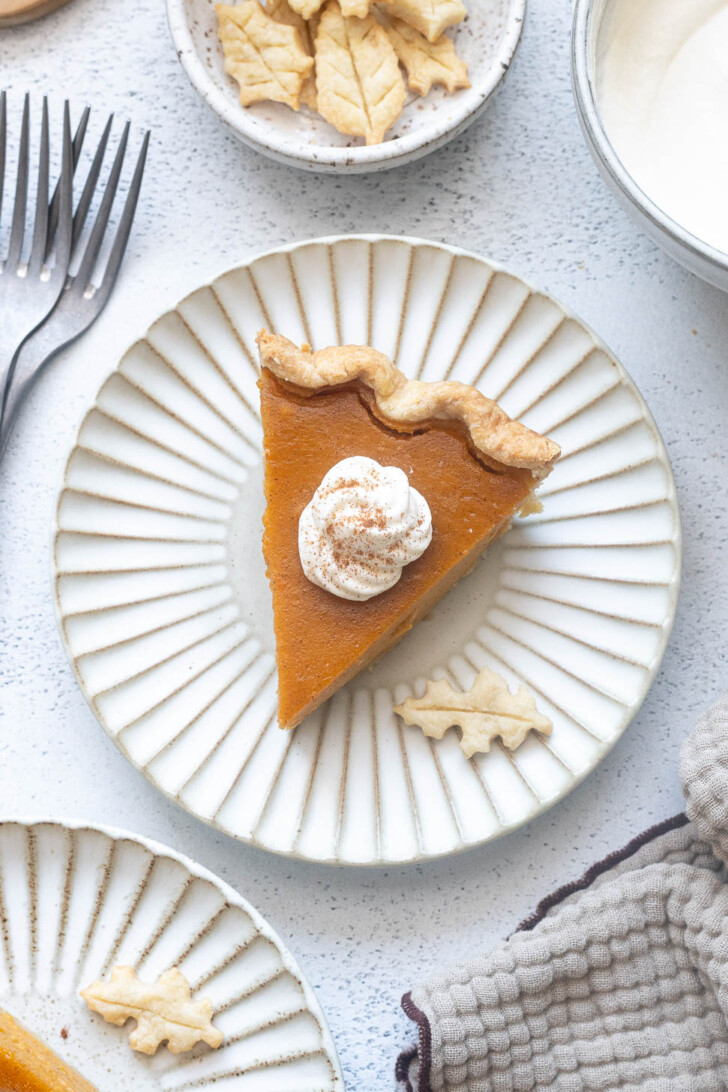
- It’s a fun twist on a classic. The flavor and texture is very similar to pumpkin pie, but the roasted butternut squash lends a naturally sweet, nutty flavor that makes it special.
- Rich and creamy. The silky smooth custard filling pairs perfectly with the buttery, flaky pie crust.
- Made with simple ingredients. There’s no refined sugar in the filling, just pure maple syrup.
- Perfect for making ahead. This pie is even better after it’s had time to chill, making it the perfect make ahead Thanksgiving dessert.
Recipe ingredients
- Butternut squash. You’ll need a medium butternut squash, about 2¾–3 pounds, which yields about 3 cups of butternut squash puree (you’ll only need 2 cups for this recipe). Roasting brings out its natural sweetness and gives the filling a wonderful flavor.
- Pie crust. My homemade flaky pie crust is my favorite for this recipe, but you can use store-bought to save time.
- Half-and-half. Creates a rich, creamy custard. Evaporated milk may be substituted.
- Maple syrup. Adds just the right amount of sweetness and a subtle caramel flavor that complements the squash beautifully. Be sure to use pure maple syrup.
- Eggs. Two large eggs create structure and help the filling set.
- Cornstarch. Stabilizes the custard so it slices beautifully, and prevents cracks.
- Spices. Cinnamon, ginger and nutmeg add warmth, which complement the flavor of the squash.
- Vanilla extract. Adds depth of flavor.
- Salt. Don’t skip it! Just a bit balances out the sweetness and enhances the flavor of the pie.
See the recipe card below for the full list of ingredients and quantities.
How to make butternut squash pie
This roasted butternut squash pie is surprisingly easy to make, especially if you roast the squash and prepare the pie dough in advance.
Pro tip:
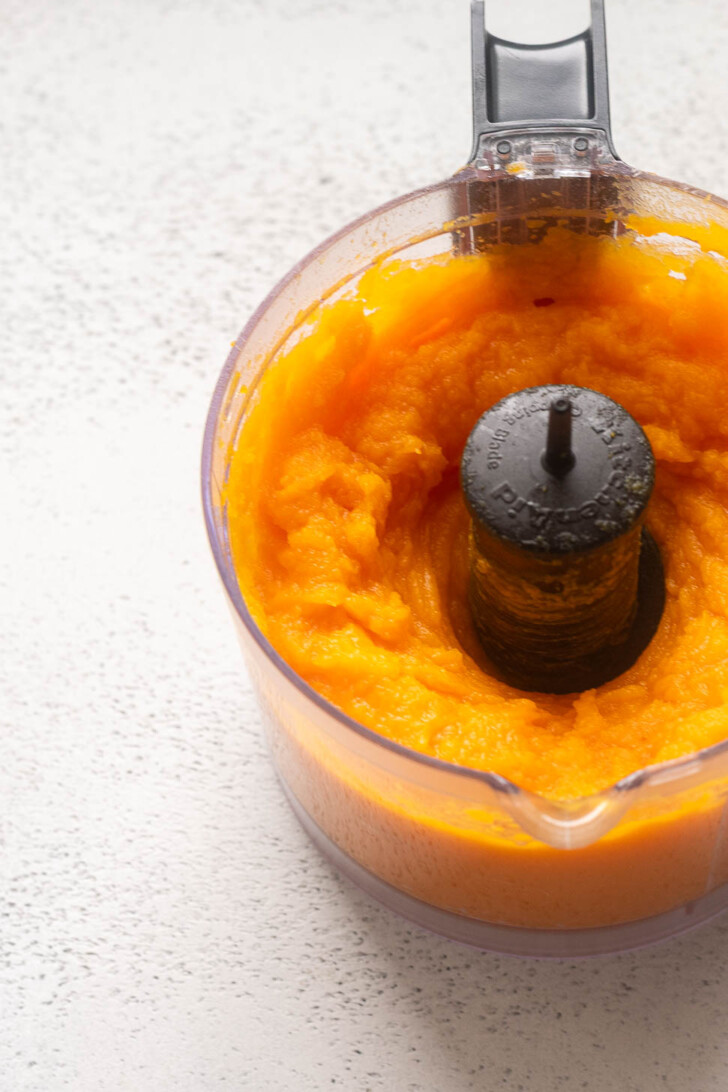
For the silkiest pie filling, purée the roasted butternut squash in a food processor until completely smooth. This makes all the difference in achieving that rich, creamy custard texture!
See the recipe card below for full instructions.
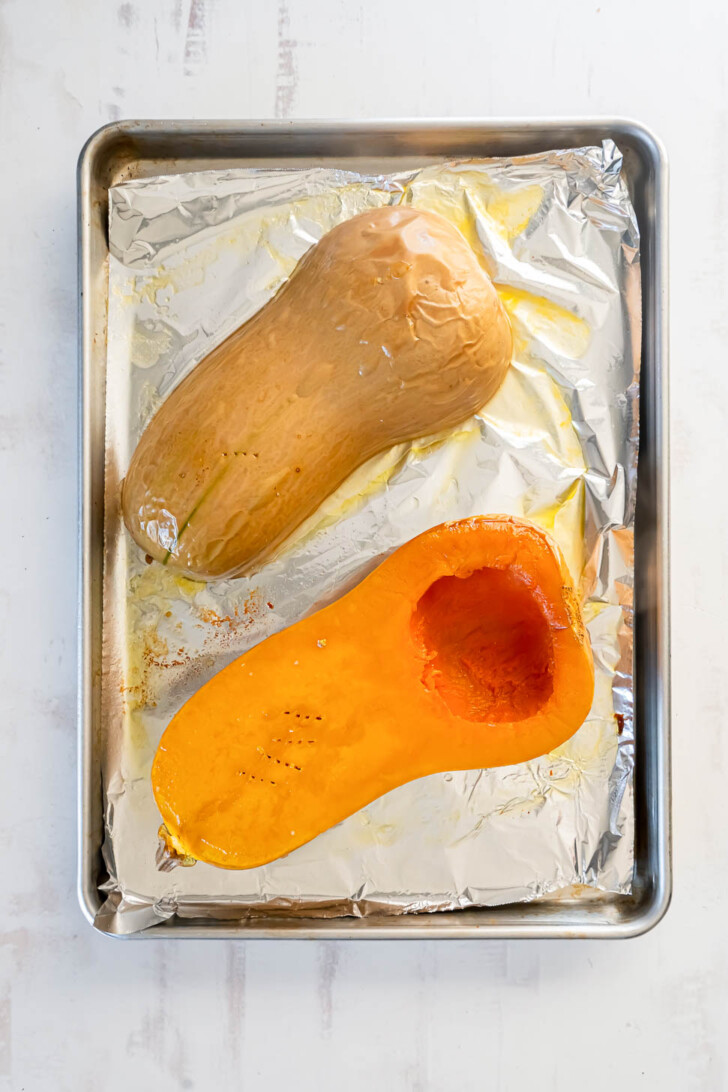
Roast the butternut squash
See my post on whole roasted butternut squash for tips on cutting the squash and more.
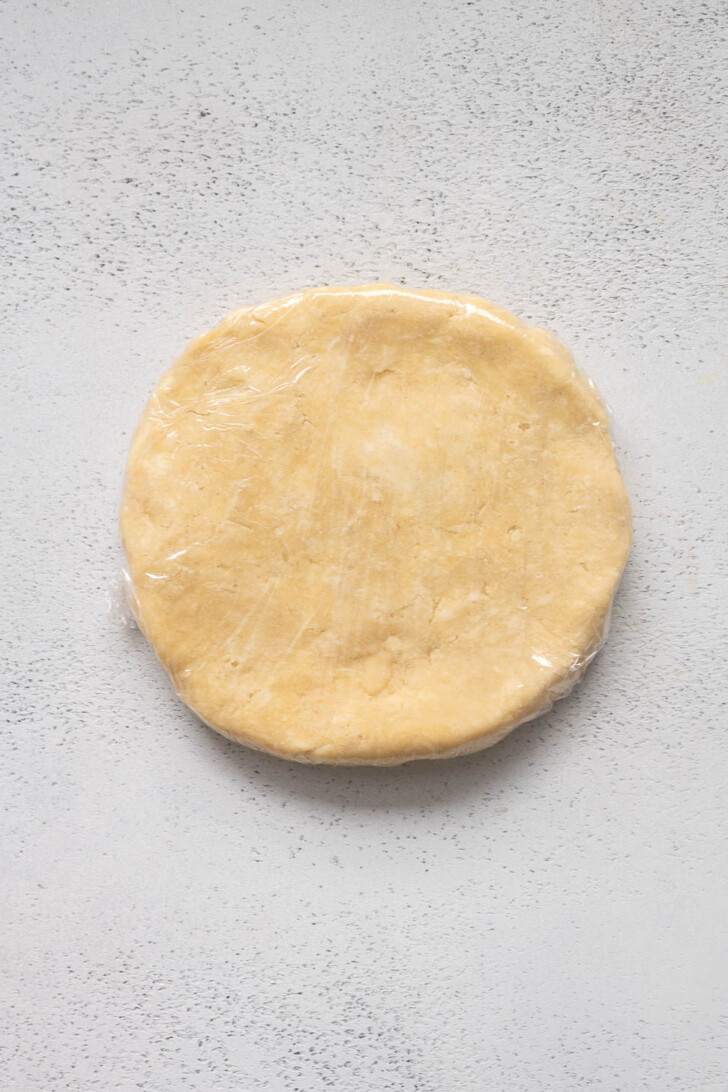
Prepare the pie crust
See my flaky pie crust recipe for step by step instructions.
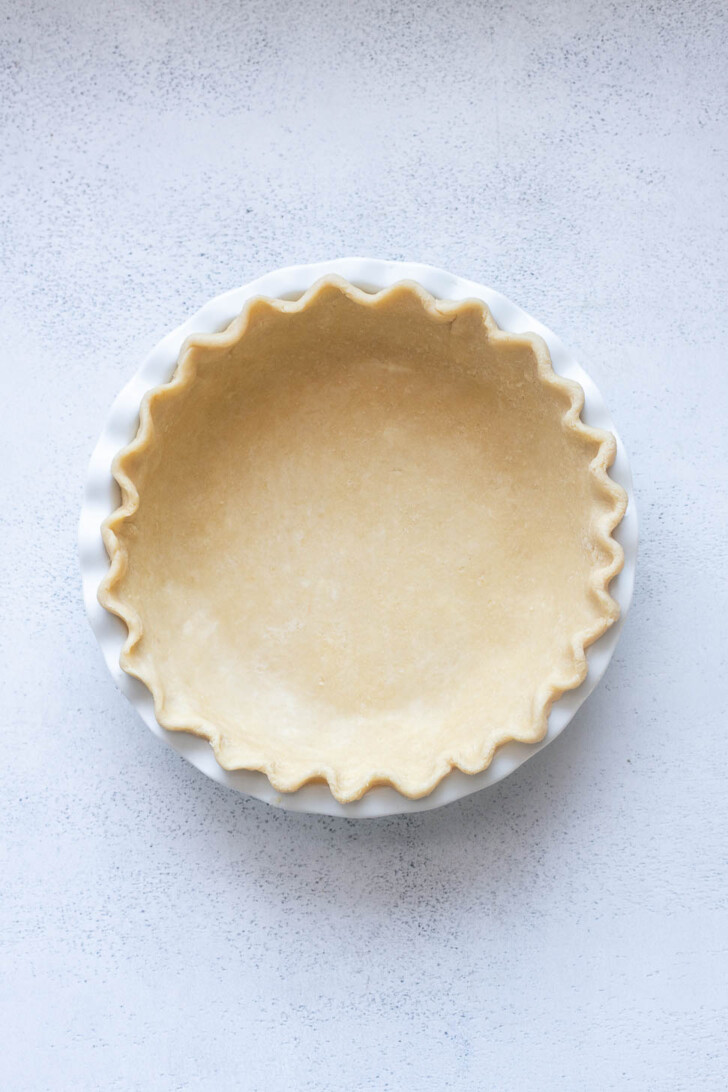
Once the pie dough has been rolled and crimped, place it in the refrigerator for a minimum of 30 minutes before baking it to chill the butter back up.
Prepare the pie
Tips for success
- Purée the squash until smooth. For the silkiest filling, process the roasted squash in food processor until completely smooth, scraping down the sides of the food processor as needed.
- Prevent lumps in the filling. Whisk the cornstarch with a tablespoon of cold half-and-half before incorporating it into the remaining ingredients. This helps it blend evenly into the custard.
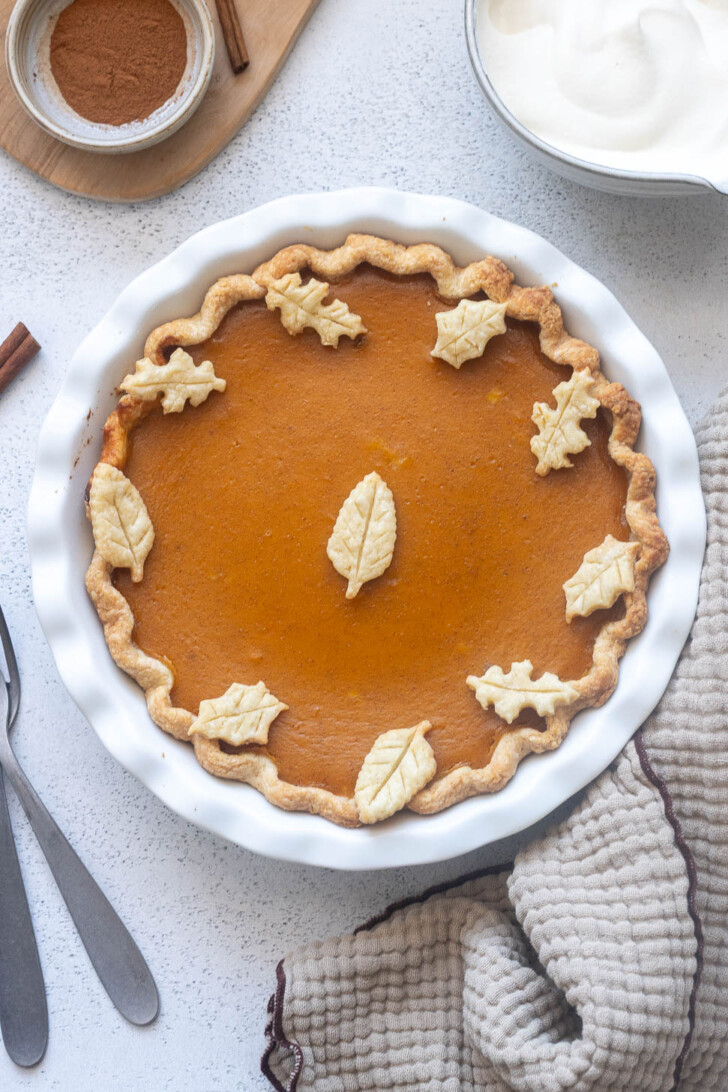
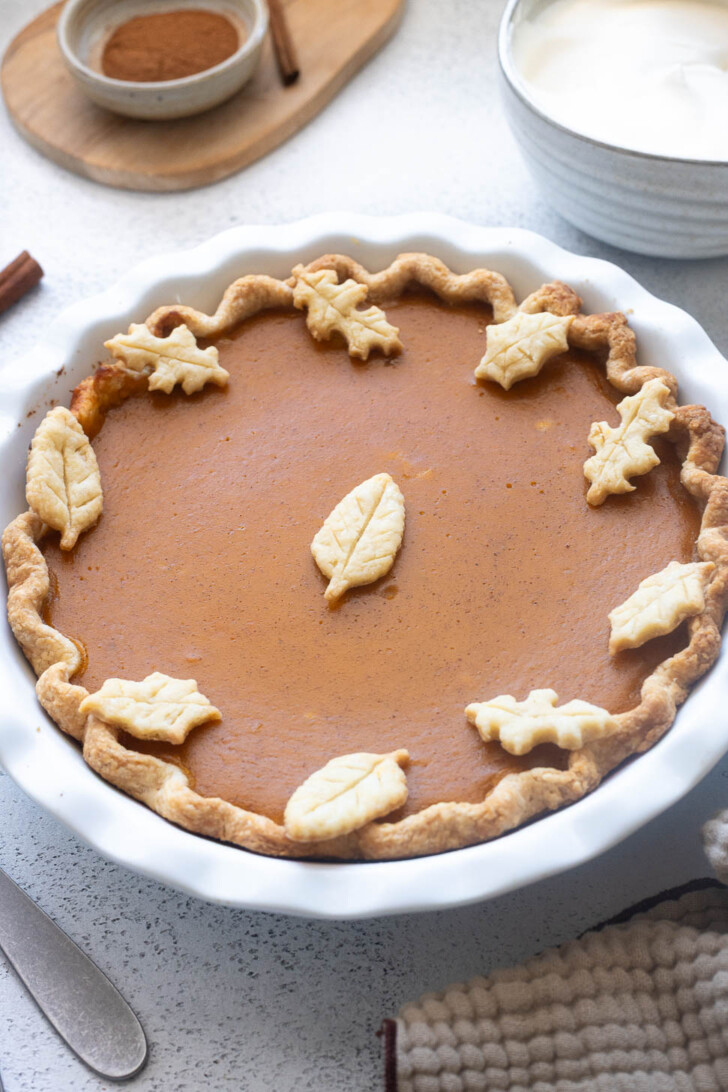
- Don’t overbake the pie. The edges should be set, but the center should still have a slight jiggle when you remove it from the oven. The filling will continue to set as it cools.
- Use a pie shield. It’s essential to use a pie shield once the crust gets brown or it will burn. Check the pie after 15-20 minutes and place the shield over the crust for the remainder of the baking time.
- Let the pie chill before slicing. Refrigerate for at least 4 hours to allow the custard to set completely for nice, clean slices.
FAQs
Yes! Butternut squash pie tastes very similar to pumpkin pie, but the squash has a slightly sweeter, nuttier flavor. Once you add the warm spices and maple syrup, most people probably won’t even know the difference!
Yes, you can substitute the half and half with a 12 ounce can of evaporated milk.
Storage
Make ahead: The pie dough and roasted butternut squash purée can be prepared up to 2 days in advance and refrigerated separately. The finished pie can also be baked 1–2 days before serving, making it perfect for Thanksgiving.
Storage: Store leftover butternut squash pie covered in the refrigerator for up to 3–4 days. Serve chilled or let it stand at room temperature briefly before serving.
More pie recipes you’ll love:
Did you try this recipe? If so, be sure to leave a review below and tag me @flavorthemoments on Facebook and Instagram
Butternut Squash Pie
Ingredients
For the pie crust and squash
- 1 9" pie crust
- 3 lb. butternut squash see note 1
For the filling
- 2 cups butternut squash puree
- 1.25 cups half and half
- 3/4 cup pure maple syrup see note 2
- 2 large eggs
- 1 tablespoon cornstarch see note 3
- 1 teaspoon vanilla extract
- 1.5 teaspoons ground cinnamon
- 1/2 teaspoon ground ginger
- 1/2 teaspoon sea salt
Instructions
Roast the butternut squash
- Preheat the oven to 400°F. Cut the butternut squash in half lengthwise and remove the seeds. Place cut-side down on a parchment-lined rimmed baking sheet and roast for 45–60 minutes, or until tender. Cool slightly, then scoop out the flesh and purée in a food processor until smooth. Measure out 2 cups. This can be done up to 1-2 days in advance.
Prepare the crust
- Place the pie disc on a floured work surface, then sprinkle the top lightly with flour. Using a floured rolling pin, roll the pie crust from the center outward, clockwise at 10 minute intervals, until it’s 1″ – 2" larger than the circumference of the pie pan. Be sure to flour the rolling pin and underneath the pie crust every few rolls to prevent sticking. Gently roll the pie crust loosely around the rolling pin. Unroll the pie dough into the pie plate and trim and crimp the edges. Chill it in the refrigerator for 30 minutes to chill the butter back up before baking.
Prepare the pie
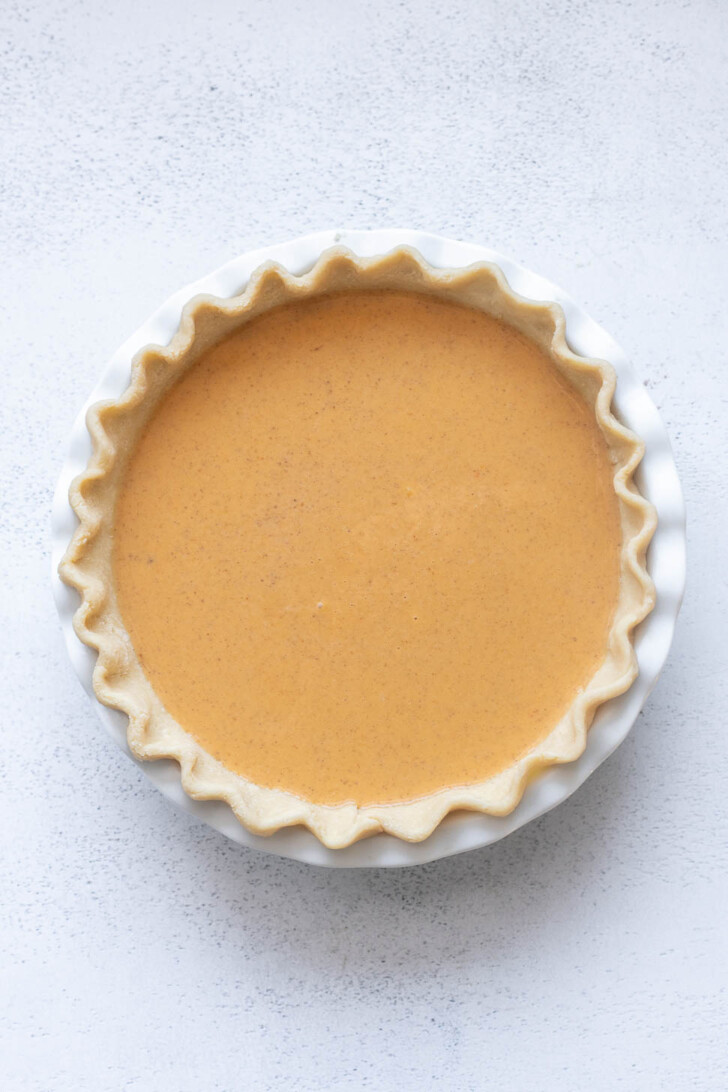
- Increase the oven temperature to 425 degrees. Place the butternut squash puree, half and half, maple syrup, eggs, cornstarch, cinnamon, ginger, vanilla and salt in a medium bowl and whisk well to combine.
- Pour into the prepared pie crust and smooth evenly. Bake for 15 minutes at 425 degrees, then reduce heat to 350 degrees and bake for 45-50 minutes or until the center is set but slightly jiggly. Be sure to cover the pie crust with a pie shield or foil after about 15-20 minutes once it has browned to prevent burning.
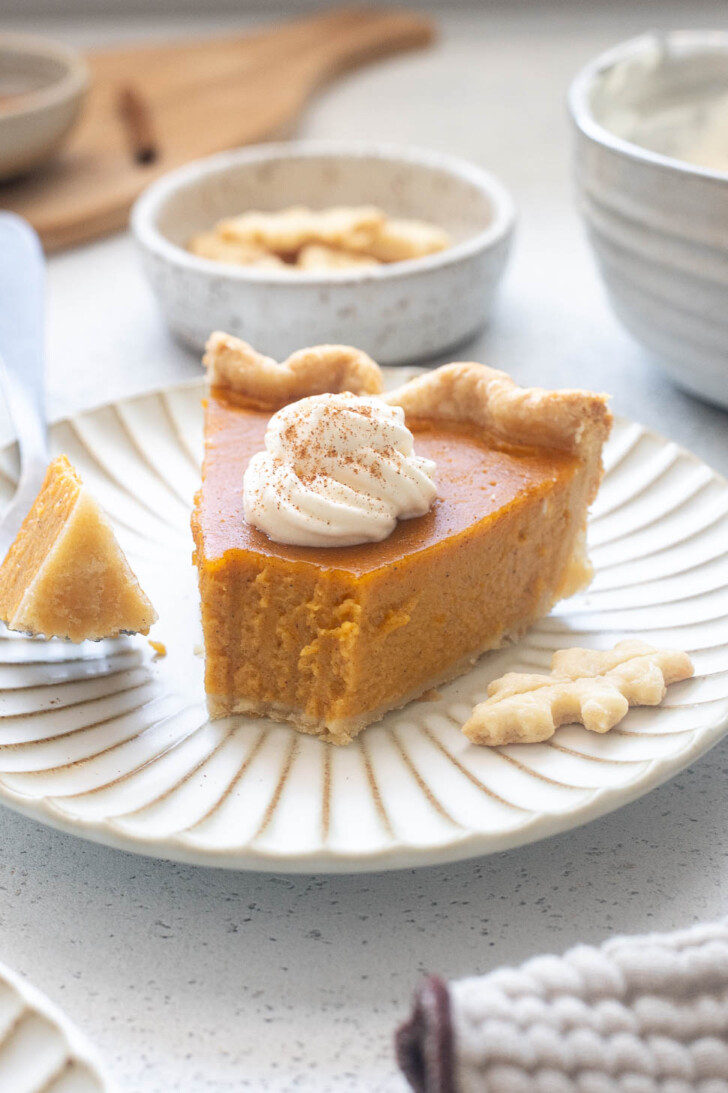
- Remove from heat and cool completely on a wire rack for 2 hours. Once the pie has cooled, place in the refrigerator to chill completely. Serve with whipped cream and enjoy!
Notes
- Pro tip: A 3 lb. butternut squash yields roughly 3 cups of puree. Reserve the extra cup for risotto or baking!
- The maple syrup can be swapped with the same amount of sugar. If using sugar, increase the half and half to 1 1/4 cups.
- The cornstarch stabilizes the pie and prevents cracks. To prevent lumps in the pie, mix it with 1 tablespoon of the cold half and half until smooth before adding it to the pie filling.
- Store leftover pie covered in the refrigerator for up to 3–4 days. Serve chilled or let it stand at room temperature briefly before serving.
Nutrition
Nutrition is estimated using a food database and is only intended to be used as a guideline for informational purposes.