

Honey Garlic Salmon
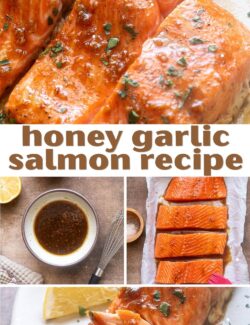
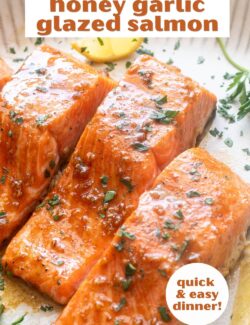
This Honey Garlic Salmon checks all the boxes for me: simple ingredients, no marinating and no sauce to cook separately. It’s simply tender, flaky salmon coated in a sticky honey garlic glaze and it’s ready in about 20 minutes!
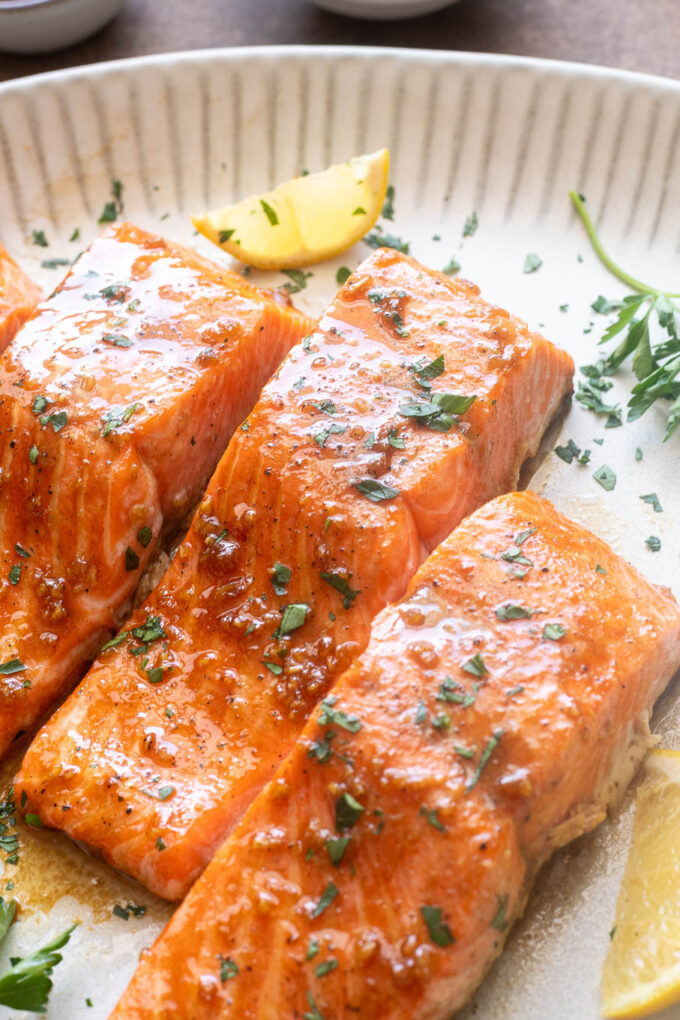
This Honey Garlic Salmon recipe is a simple dinner that produces salmon that tastes anything but basic. The salmon is tender and flaky with a sticky honey garlic glaze that’s sweet, savory and packed with flavor.
The glaze comes together in minutes with honey, garlic, olive oil, Dijon mustard, lemon juice and coconut aminos or soy sauce. Half is brushed over the salmon before baking, then the rest is added toward the end so it gets beautifully glossy and caramelized.
There’s no marinating and no sauce to cook separately, so this recipe takes minutes to prep and it’s ready about 20 minutes. It’s an easy salmon dinner that’s perfect for busy weeknights, but it’s impressive enough for entertaining too.
Love salmon? Be sure to try my lemon dijon baked salmon and garlic butter salmon recipes as well!
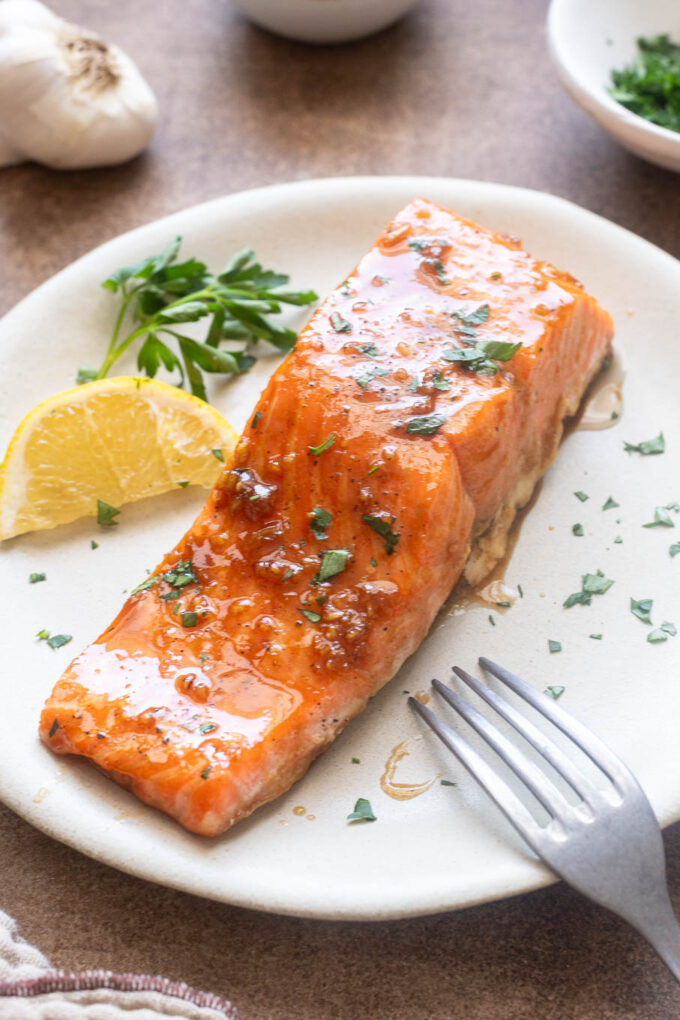
Why you’ll love this recipe
- Quick and easy. The salmon takes just 11–15 minutes to bake and there’s no marinating involved.
- Sweet and savory. Honey adds sweetness, while Dijon, garlic, lemon and coconut aminos or soy sauce balance it with plenty of savory flavor.
- Big flavor, simple ingredients. The honey garlic salmon glaze is made with pantry staples and fresh garlic and lemon.
- Minimal cleanup. Everything cooks on one parchment-lined baking sheet.
Recipe ingredients
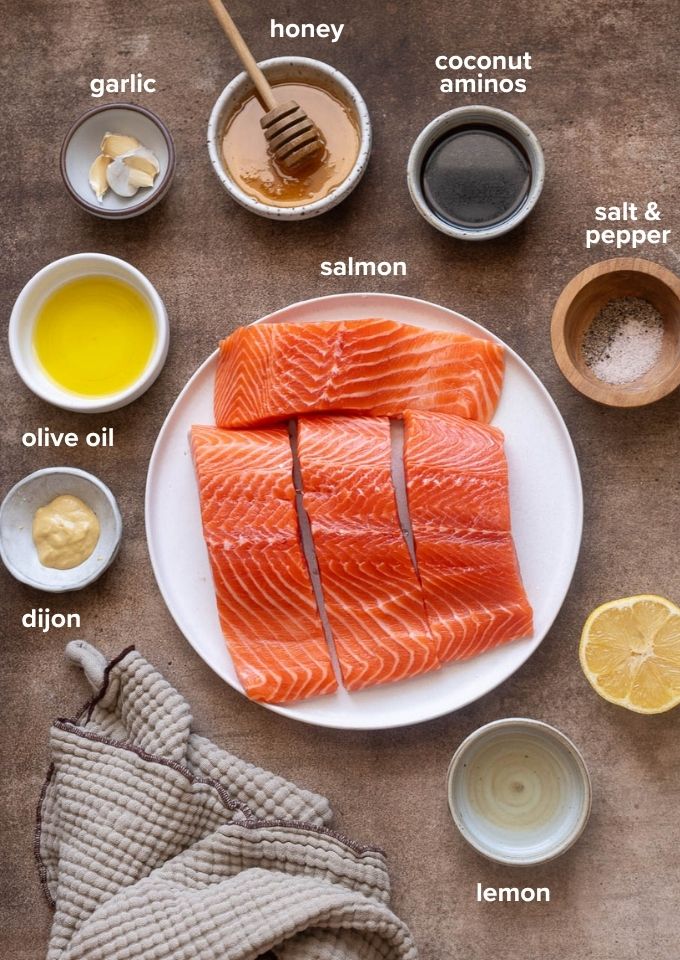
- Salmon. You’ll need (4) salmon fillets, or about 1½ pounds total. Try to use fillets that are similar in thickness so they’ll finish cooking at roughly the same time.
- Honey. Adds sweetness and gives the salmon that beautiful sticky, glossy finish.
- Coconut aminos or soy sauce. Adds savory, umami flavor that balances the sweetness of the honey. Use whichever you have on hand.
- Olive oil. Adds richness and helps create the base of the glaze.
- Lemon juice. A little acidity brightens the sauce and balances the honey.
- Dijon mustard. Adds tanginess and depth without making the glaze taste overly mustardy.
- Garlic. Three fresh cloves give the honey garlic sauce plenty of flavor.
- Salt and pepper. Season to taste. Keep in mind that soy sauce is saltier than coconut aminos, so adjust the salt accordingly.
See the recipe card below for the full list of ingredients and quantities.
How to make this recipe
This recipe couldn’t be much easier, and there’s no need to marinate the salmon ahead of time.
Pro tip: Cooking time will vary based on the thickness of your salmon. Be sure to check for doneness after 8-10 minutes using a meat thermometer.
See the recipe card below for full instructions.
Tips for success
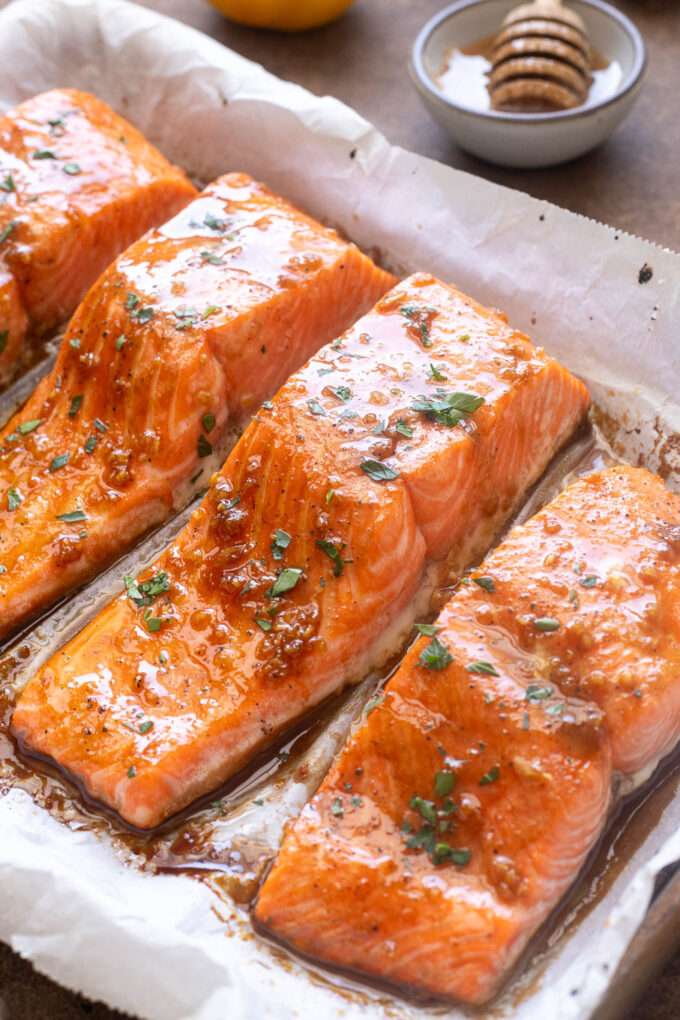
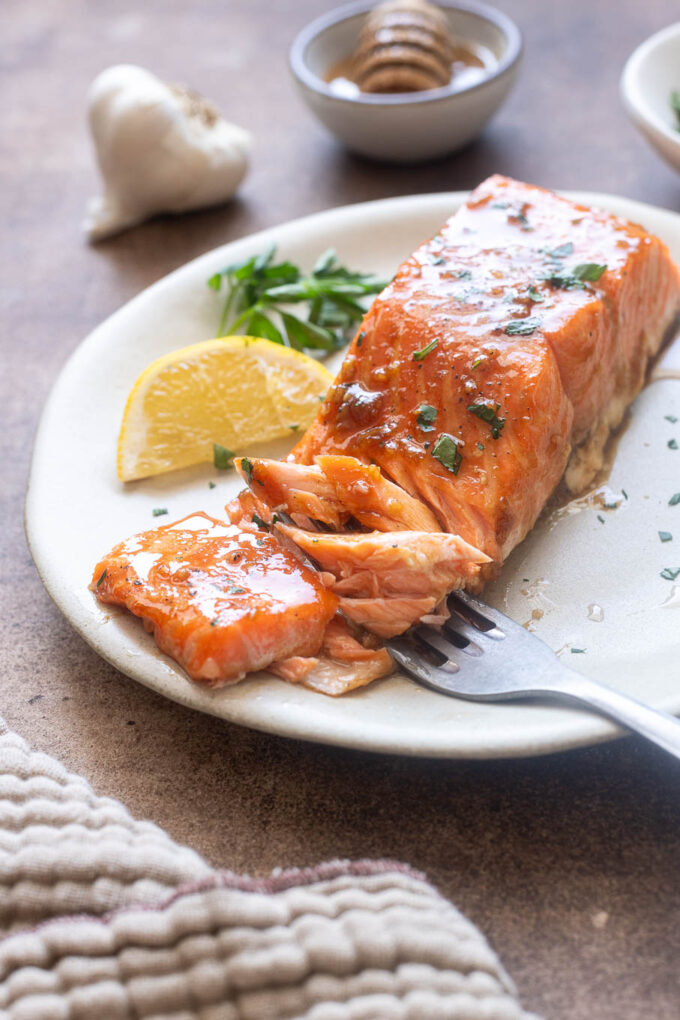
- Cook salmon to medium. I prefer salmon cooked to medium, or about 130°F in the thickest part, when it’s moist, tender and flakes easily with a fork. Keep in mind that the temperature will continue to rise a few degrees after you remove it from the oven. If you prefer your salmon more well done, cook it longer; the USDA recommends 145°F for food safety.
- Add the glaze in two stages. This is one of the keys to the recipe. The first layer flavors the salmon as it cooks, while the second creates that glossy, sticky finish without burning the honey.
- Use fillets of similar thickness. They’ll cook much more evenly. If one is significantly thinner, check it before the others.
- Adjust the seasoning based on your sauce. Soy sauce contains more sodium than coconut aminos, so you’ll likely need less added salt.
Recipe FAQs
Absolutely. Place the fillets skin-side down on the baking sheet and bake as directed. The skin also helps protect the bottom of the salmon from drying out.
Yes. Thaw frozen salmon completely and pat it dry before seasoning and adding the glaze. Removing excess moisture will help the sauce adhere to the fish.
I prefer salmon cooked to medium, or about 130°F when checked with an instant-read thermometer in the thickest part of the fillet. At this temperature, it should be tender, moist and flake easily with a fork. The temperature will continue to rise slightly as it rests.
Serving suggestions
This honey garlic glazed salmon works with just about any simple side dish. I especially love it with some of the recipes below:
- Serve with creamy coconut rice or quinoa to soak up the extra sauce. Serve with a side of air fryer broccoli or a simple butter lettuce salad.
- It’s also great with yukon gold mashed potatoes for a heartier dinner. Try garlic mashed cauliflower for a lighter option.
- The salmon would also be wonderful atop my Asian black rice salad.
Storage and reheating
- Store leftover salmon in an airtight container in the refrigerator for up to 3 days.
- To reheat, warm it gently in a 300°F oven until just heated through, or microwave it at reduced power in short intervals. Avoid overheating it, as salmon can dry out quickly.
More salmon recipes you’ll love:
Did you try this recipe? If so, be sure to leave a review below and tag me @flavorthemoments on Facebook and Instagram
Honey Garlic Salmon
Equipment
Ingredients
- 1.5 lbs. salmon fillets (4) 6 ounce fillets; see note 2
- 2 tablespoons olive oil sub with melted butter
- 2 tablespoons coconut aminos sub with reduced sodium soy sauce or tamari; see note 3
- 2 tablespoon honey
- 1 tablespoon fresh lemon juice
- 3 cloves garlic minced
- 2 teaspoons Dijon mustard
- 1/2 teaspoon sea salt or to taste
- 1/4 teaspoon black pepper or to taste
Instructions
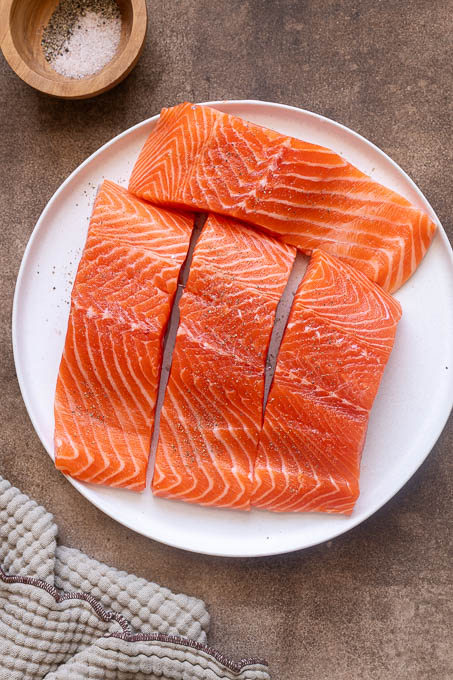
- Place the salmon fillets on a parchment or foil lined baking sheet at room temperature for 20-30 minutes prior to cooking so that they cook evenly. Remove any pin bones as necessary. Season lightly with salt and pepper.1.5 lbs. salmon fillets
- Preheat the oven to 400 degrees.
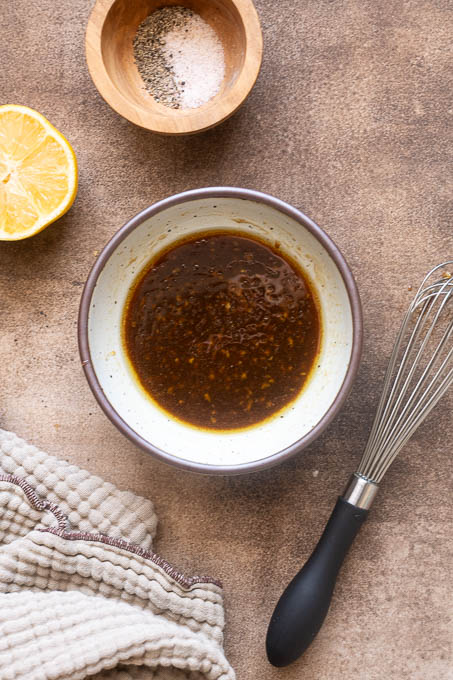
- Whisk together the olive oil, coconut aminos, honey, lemon juice, garlic, Dijon mustard, salt and pepper in a medium bowl.2 tablespoons olive oil, 2 tablespoons coconut aminos, 2 tablespoon honey, 1 tablespoon fresh lemon juice, 3 cloves garlic, 2 teaspoons Dijon mustard, 1/2 teaspoon sea salt, 1/4 teaspoon black pepper
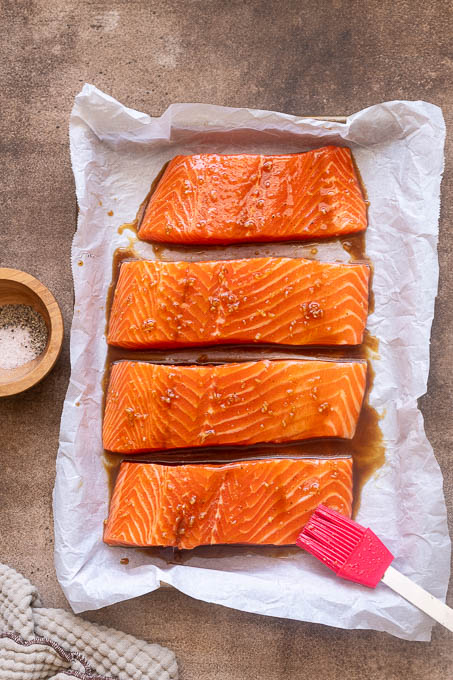
- Brush half of the sauce over the salmon fillets and bake for 8-10 minutes. Brush the remaining sauce over the top and continue baking for 3-5 minutes longer or until the salmon reaches 130 degrees for medium doneness (or about 145 degrees according to USDA recommendations). Note that cooking time will vary depending on the thickness of your salmon, so be sure to check for doneness after 8 minutes.
- Remove from heat and serve immediately with your favorite sides. Enjoy!
Notes
- Pro tip: Cooking time will vary based on the thickness of your salmon, so be sure to check for doneness after 8 minutes with a meat thermometer.
- Use fillets of similar thickness. They’ll cook much more evenly. If one is significantly thinner, check it before the others.
- Adjust the seasoning based on your sauce. Soy sauce contains more sodium than coconut aminos, so you’ll likely need less added salt.
- Store leftover salmon in an airtight container in the refrigerator for up to 3 days.
Nutrition
Nutrition is estimated using a food database and is only intended to be used as a guideline for informational purposes.
