

February Seasonal Produce Guide


February is all about bright citrus, hearty winter vegetables, and nutrient-rich greens that thrive in cooler weather. This February Seasonal Produce Guide highlights the fruits and vegetables in season in February, grouped by category, to help you shop, plan meals, and cook with seasonal ingredients all month long.
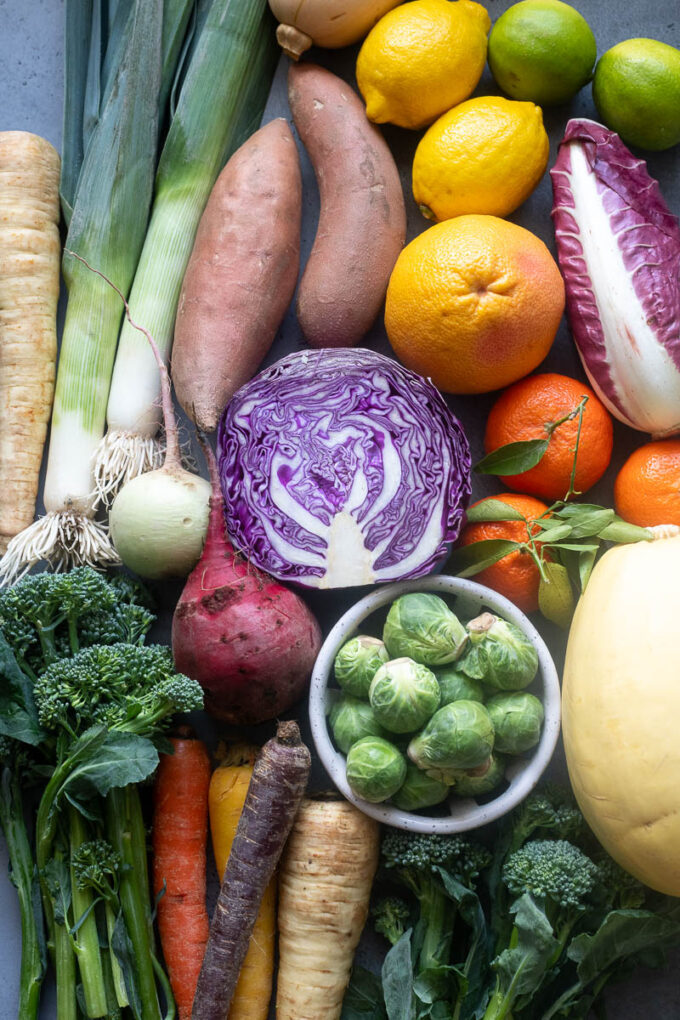
We’ve officially hit the middle of winter this month! February is all about leaning into hearty winter vegetables, peak citrus, and long-lasting storage crops that are still incredibly fresh and flavorful.
This seasonal produce guide breaks down February produce by category, highlights specific varieties, and includes recipe ideas so you can easily cook with what’s in season right now.
Whether you’re meal planning, grocery shopping, or just looking for inspiration, this February produce guide is designed to help you shop smarter, plan meals with ease, and cook confidently with seasonal ingredients all month long.
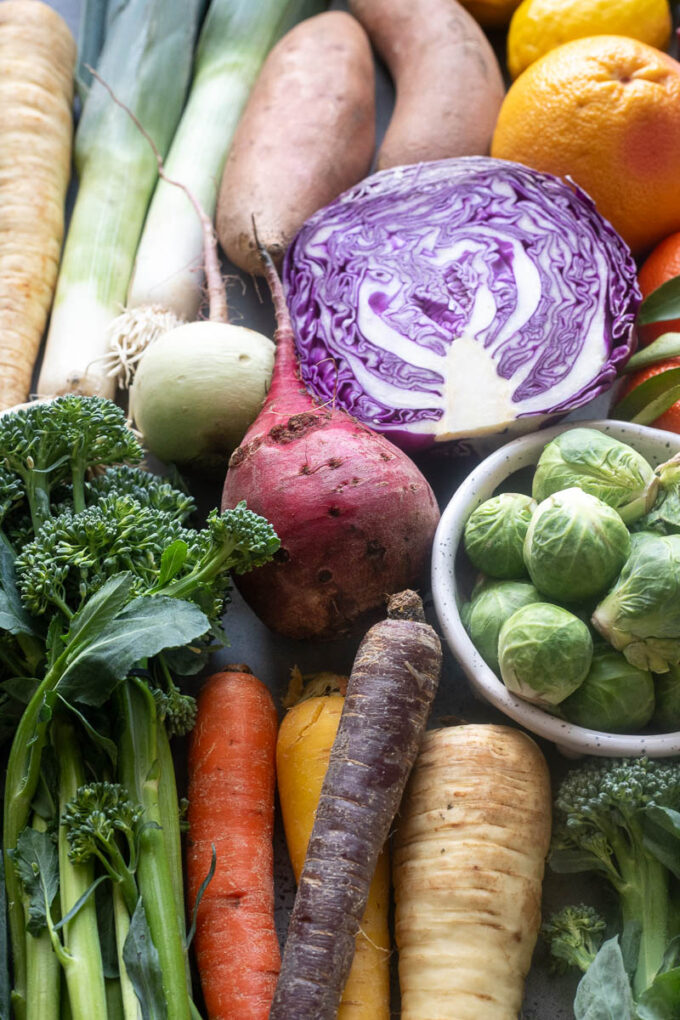
How to Use This February Seasonal Produce Guide
Use this February seasonal produce guide as a quick reference to help you shop smarter and cook with confidence all month long.
- Plan your meals by choosing recipes that feature February produce at its peak
- Save money and reduce food waste by buying fruits and vegetables that last longer in winter
- Mix and match categories to build soups, salads, sheet-pan meals, and simple sides
- Click through to recipe ideas for easy, real-food ways to use each ingredient
This guide is designed to be flexible—whether you’re planning a full week of meals or just need inspiration for what to cook tonight.
Why Seasonal Produce Matters in February
- Better flavor and texture
- More affordable at the store
- Naturally longer shelf life, making winter produce easier to store and cook with
- Supports local and regional farmers
Winter produce shines in soups, salads, roasts, casseroles, and simple sides—exactly the kind of real-food cooking that this cold winter month calls for.
Not sure how to choose the best produce or store it once you get home? This guide on how to choose and store produce walks through simple tips to help keep fruits and vegetables fresh longer and reduce food waste.
Fruits and vegetables in season in February
Below is a list of the fruits and vegetables that are in season during the month of February. This list may vary depending on where you are located.

Citrus Fruits (Peak Season)

Common February citrus varieties
- Oranges (blood oranges, Cara Cara, navel, Valencia)
- Grapefruit (pink, ruby red)
- Lemons
- Limes
- Tangerines & mandarins
- Pomelos
Why citrus is great now
Citrus is at its juiciest and sweetest in winter, adding brightness to everything from salads to sauces and desserts.
Want to learn more about the different varieties and how to use them? See my complete Citrus Guide for flavor profiles, peak season timing and cooking tips.
How to use citrus
- Segment into salads
- Use zest to add flavor without extra acidity
- Squeeze fresh juice into dressings, marinades, and soups for a pop of flavor
Recipe ideas
Leafy Greens & Chicories
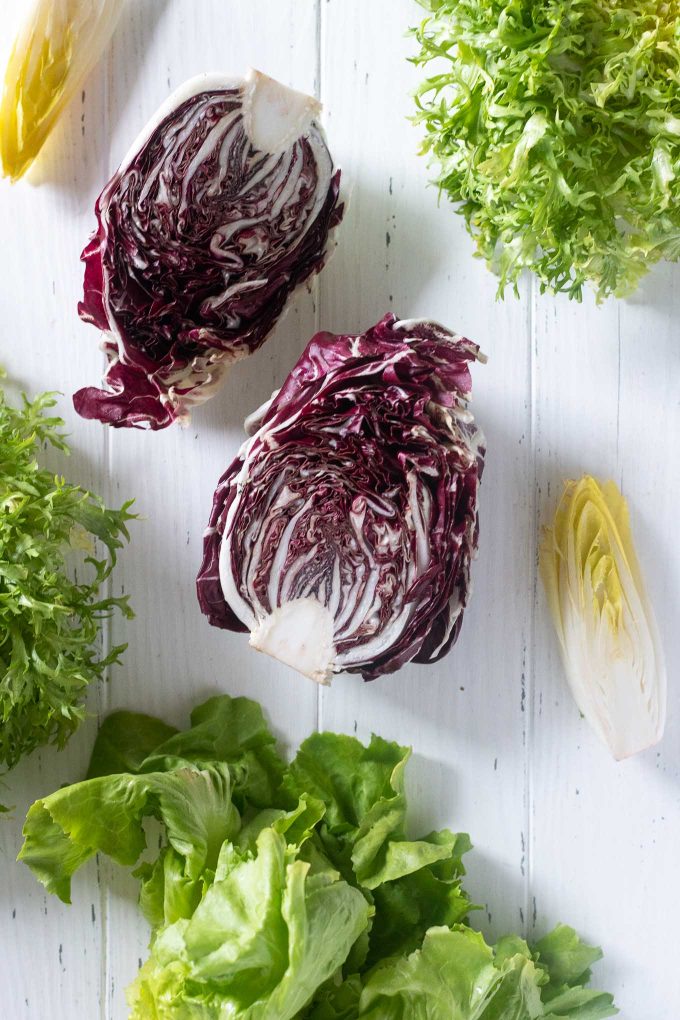
Greens in season
- Chicories (endive, escarole, frisée, radicchio)
- Kale (curly, lacinato)
- Spinach
- Arugula
- Swiss chard
Why greens shine in February
Cool weather makes greens sweeter and less bitter, especially chicories.
Chicories are especially popular in winter thanks to their bold flavor and crisp texture, and February is an ideal time to experiment with them raw or lightly cooked.
How to use them
- Massage kale for salads
- Wilt into soups and pasta
- Roast or sauté hearty greens
- Use chicories raw for crunch and contrast
Recipe ideas
- Winter roasted vegetable kale salad
- Spinach feta baked turkey meatballs
- Bacon and egg breakfast casserole
Cruciferous vegetables
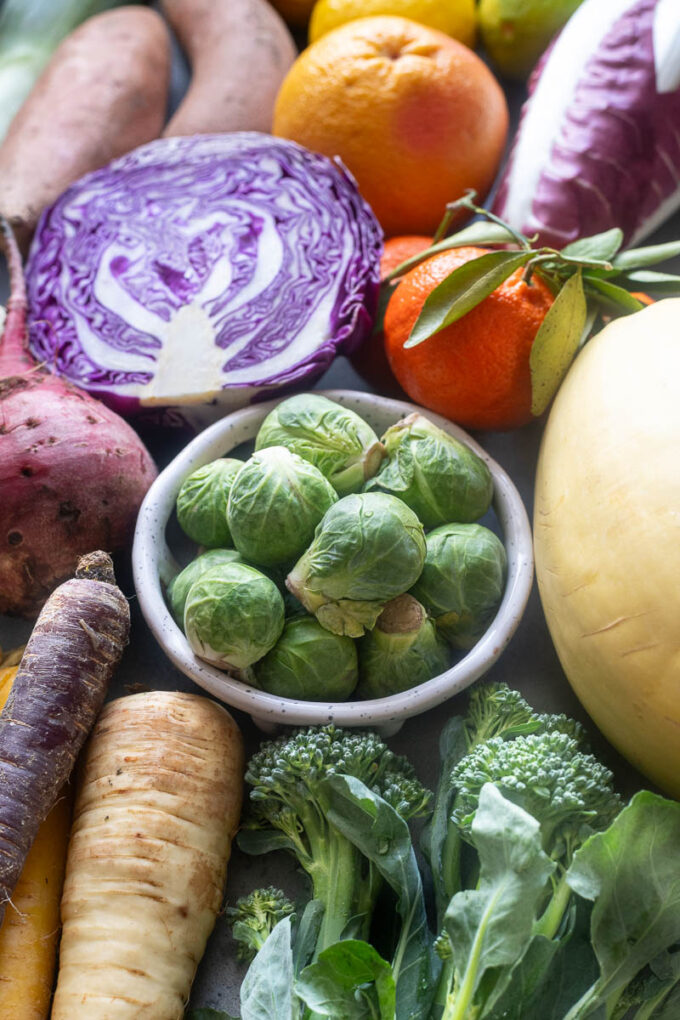
February crucifers
- Brussels sprouts
- Cauliflower
- Broccoli
- Cabbage (green, red, Savoy)
Why they’re ideal now
Cold weather improves sweetness and texture, especially for roasting.
How to use
- Roast until caramelized
- Shave raw for slaws and salads
- Add to soups and casseroles
Recipe ideas
Root vegetables
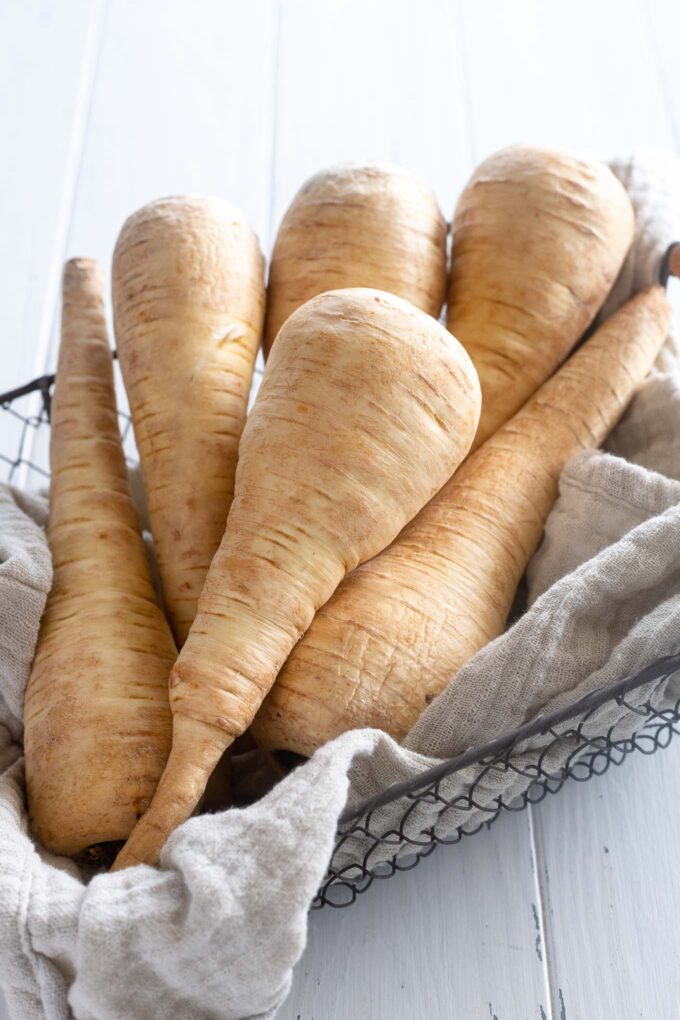
Root veggies in season
- Carrots
- Beets
- Parsnips
- Turnips
- Rutabaga
- Sweet potatoes
Why they last through winter
Root vegetables store well and develop deeper flavor over time.
How to use
- Roast with olive oil and herbs
- Mash or purée
- Add to soups, stews, and sheet-pan meals
Recipe ideas
Alliums (Onions, Garlic, Leeks)
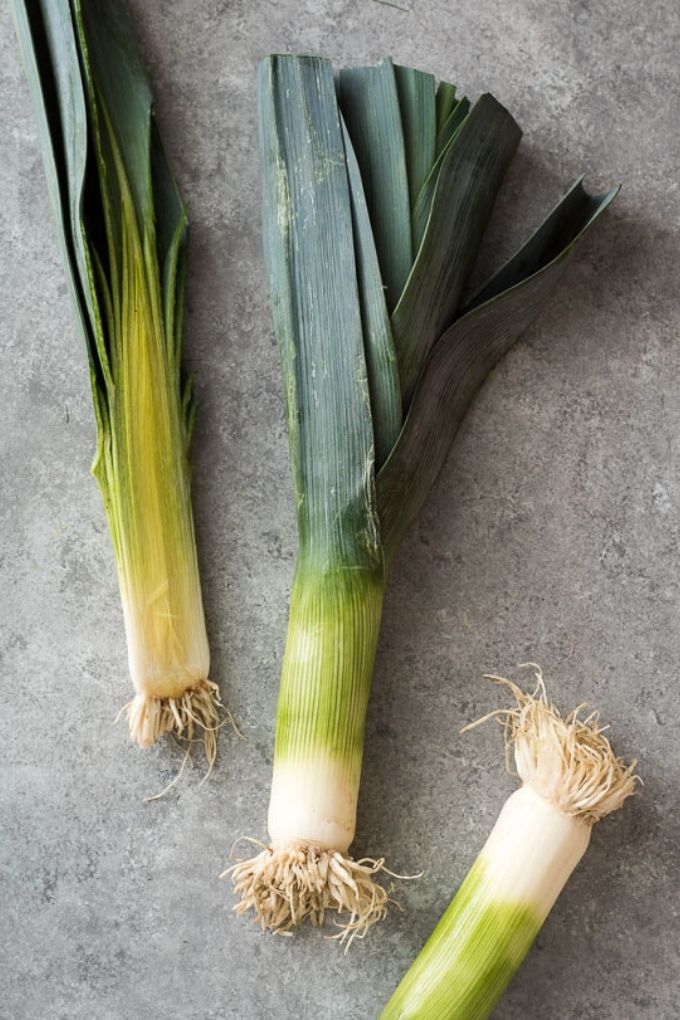
Alliums in season now
- Yellow, white, and red onions
- Garlic
- Shallots
- Leeks
Why they matter
Alliums are foundational flavor builders and are available year-round, with excellent quality in winter.
How to use
- Sauté as a base for soups and sauces
- Roast whole or caramelize slowly
- Use leeks for a milder onion flavor
Recipe ideas
Winter squash & cool weather vegetables
This category includes long-storing winter squash and a handful of cool-weather vegetables that peak in flavor during late winter.
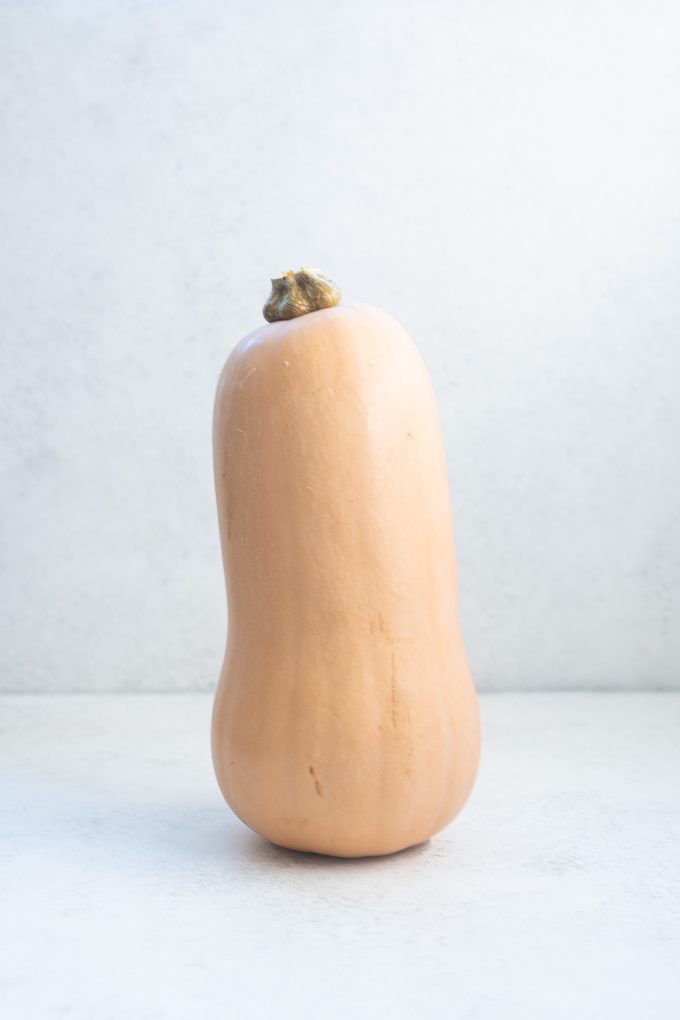
Varieties
- Butternut squash
- Acorn squash
- Kabocha squash
- Spaghetti squash
- Fennel
- Celery root (celeriac)
- Jerusalem artichokes (sunchokes)
Why they’re still in season
Winter squash stores beautifully and remains sweet and firm well into late winter.
How to use
- Roast and stuff
- Purée into soups
- Use spaghetti squash as a pasta alternative
Recipe ideas
Apples & Pears (Storage Fruit)
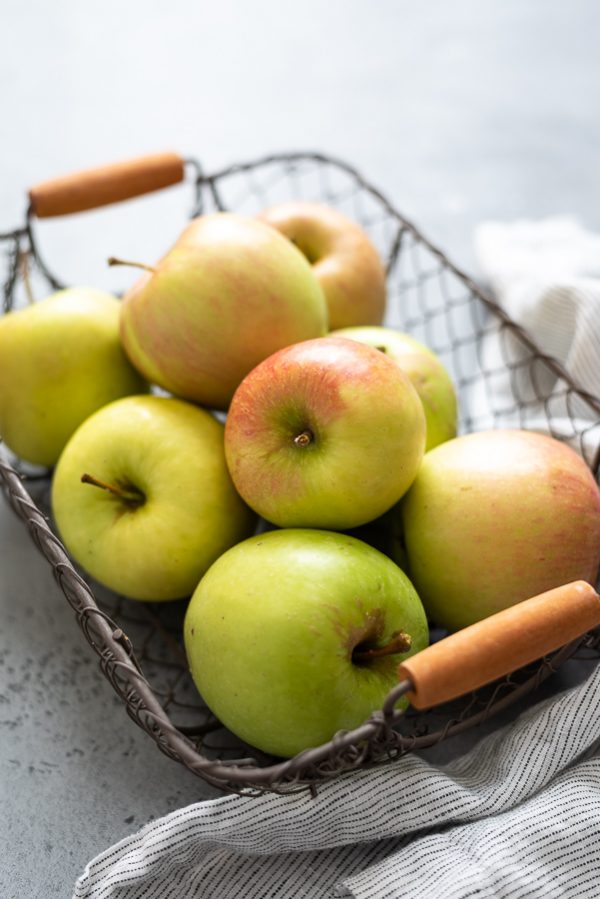
Available fruits
- Apples (many varieties)
- Pears (Bartlett, Bosc, Anjou)
Why they still count as seasonal
These fruits are stored from fall harvests and remain high quality through winter.
How to use
- Slice into salads
- Bake or roast
- Add to savory dishes for sweetness
Recipe ideas
