

How to Cook with Citrus


Bright, fresh citrus is one of the easiest ways to make any dish taste better. From balancing rich foods to adding fresh flavor to salads, marinades, and desserts, citrus plays a key role in everyday cooking. This guide shows you how to cook with citrus, understand different varieties, and make the most of them when they’re in season. You’ll also find a variety of citrus recipes to inspire you to use it more often!
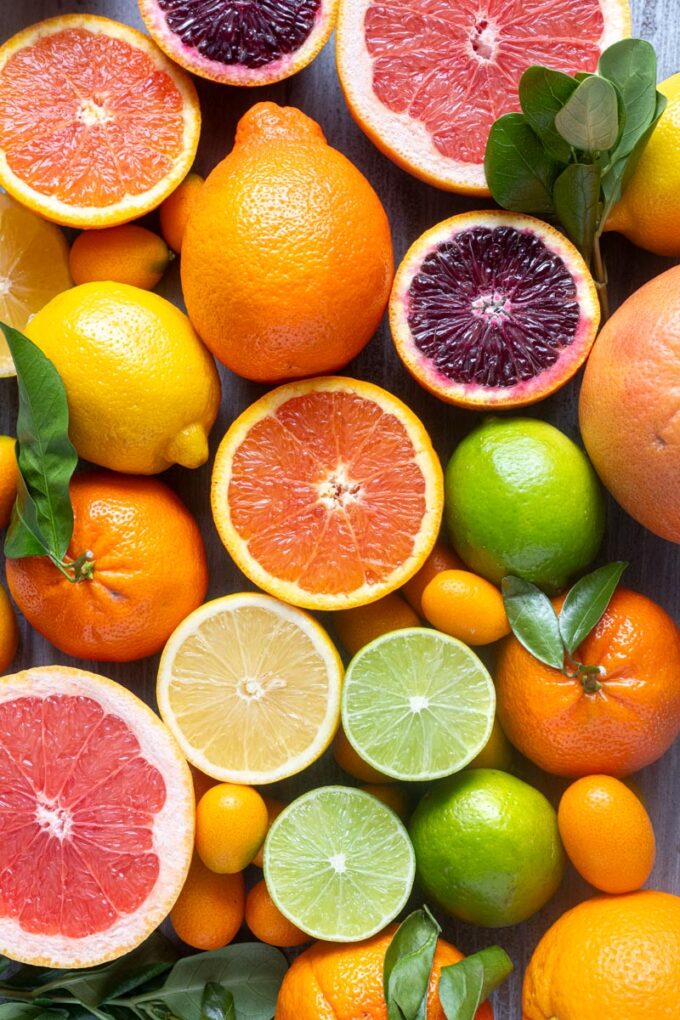
I use citrus daily in my recipes because it adds brightness, balance and fresh flavor to everything from savory dinners and salads to sweet treats like quick breads and dessert. It’s amazing how just a bit of fresh citrus juice or zest can transform a dish from ordinary to extraordinary!
This Citrus Guide covers when citrus fruits are in season — including oranges, lemons, limes, grapefruit and more — along with their flavor profiles and culinary uses. You’ll also learn how to choose and store citrus properly, and discover how to cook with citrus in savory dishes, baked goods and desserts.
Whether you’re marinating chicken with lemon, tossing citrus segments into salads or baking a classic key lime pie, understanding citrus varieties — and when they taste their best — makes seasonal cooking even easier and more delicious.
Why cooking with citrus makes food better
Citrus does more than add flavor — it transforms dishes by balancing richness and enhancing natural ingredients.
Citrus adds:
- Acidity to balance fat and richness
- Natural sweetness without added sugar
- Aromatic zest that intensifies flavor
- Brightness that lifts heavier dishes
- Tenderizing power in marinades
I love adding a squeeze of fresh lemon or lime at the end of cooking as it brightens the flavor of every dish.
Easy ways to use citrus in cooking
If you’re not sure where to start, these are the easiest ways to incorporate citrus into everyday meals:
- Finish soups, roasted vegetables, or proteins with a squeeze of lemon or lime.
- Add zest to baked goods, marinades, and dressings.
- Use citrus juice in vinaigrettes and sauces.
- Toss citrus segments into salads for freshness.
- Pair citrus with savory foods like salmon, chicken, avocado, and olive oil.
Common citrus varieties and flavor profiles
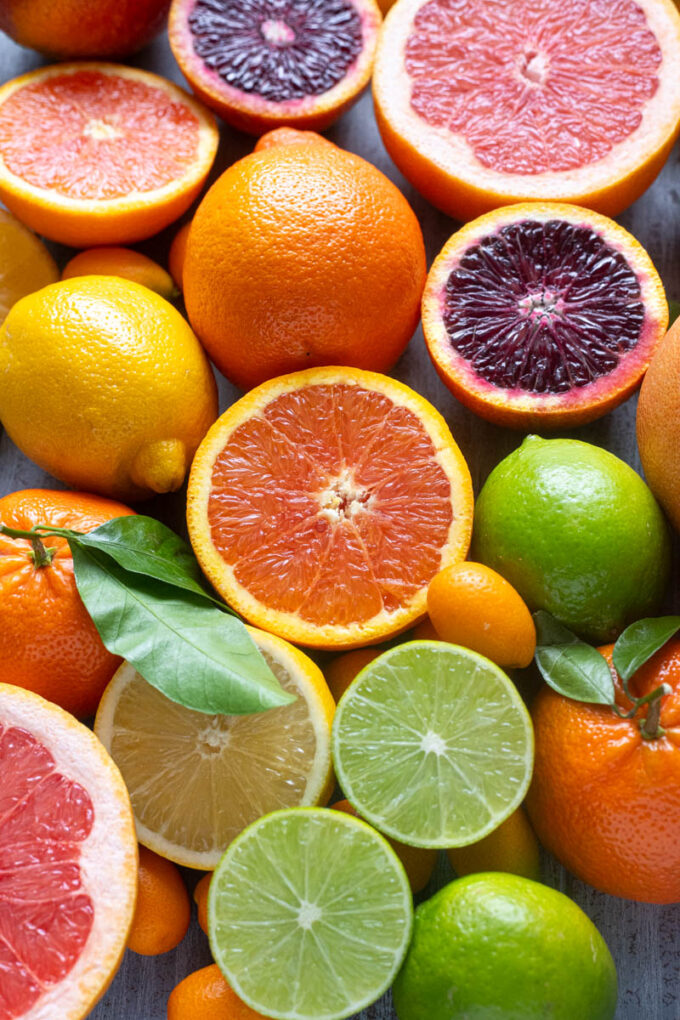
Oranges
Types: Navel, Cara Cara, Valencia, blood orange
Flavor: Sweet to sweet-tart
Best Uses: Salads, smoothies, marinades, roasting poultry
- Navel oranges are sweet and seedless, perfect for snacking and salads.
- Cara Cara oranges have pink flesh and subtle berry notes.
- Blood oranges offer a sweet-tart flavor and deep red color.
- Valencia oranges are exceptionally juicy and ideal for fresh-squeezed juice.
Lemons
Types: Eureka, Meyer
Flavor: Bright and tart; Meyer lemons are slightly floral and less acidic
Best Uses: Baking, vinaigrettes, sauces, soups
Meyer lemons are especially popular during winter and early spring because of their balanced sweetness and thin skin.
Limes
Types: Persian (most common), Key limes
Flavor: Sharp, bright acidity
Best Uses: Mexican and Asian dishes, marinades, desserts
Key limes are smaller and more aromatic, commonly used in key lime pie and curds.
Grapefruit
Flavor: Sweet-tart with slight bitterness
Best Uses: Salads, broiled, breakfast bowls
Pink and ruby grapefruit tend to be sweeter than white varieties.
Mandarins (Clementines, Tangerines & Satsumas)
Flavor: Sweet, low acidity, easy to peel
Peak Season: November through February
Best Uses: Snacking, lunchboxes, salads, light desserts
Mandarins are a small, loose-skinned category of citrus that includes clementines, tangerines and satsumas. They’re typically sweeter and easier to peel than larger oranges, making them ideal for everyday snacking.
- Clementines are very sweet and usually seedless.
- Tangerines have a slightly deeper orange color and mild tartness.
- Satsumas are especially easy to peel and very juicy.
Kumquats
Flavor: Sweet skin with tart flesh
Peak Season: December through March
Best Uses: Salads, marmalade, desserts, cocktails
Kumquats are unique because the entire fruit is edible — peel and all. The skin is naturally sweet while the interior is tart, creating a balanced sweet-tart bite. They’re excellent sliced into salads, simmered into preserves, or used as a bright garnish for desserts and drinks.
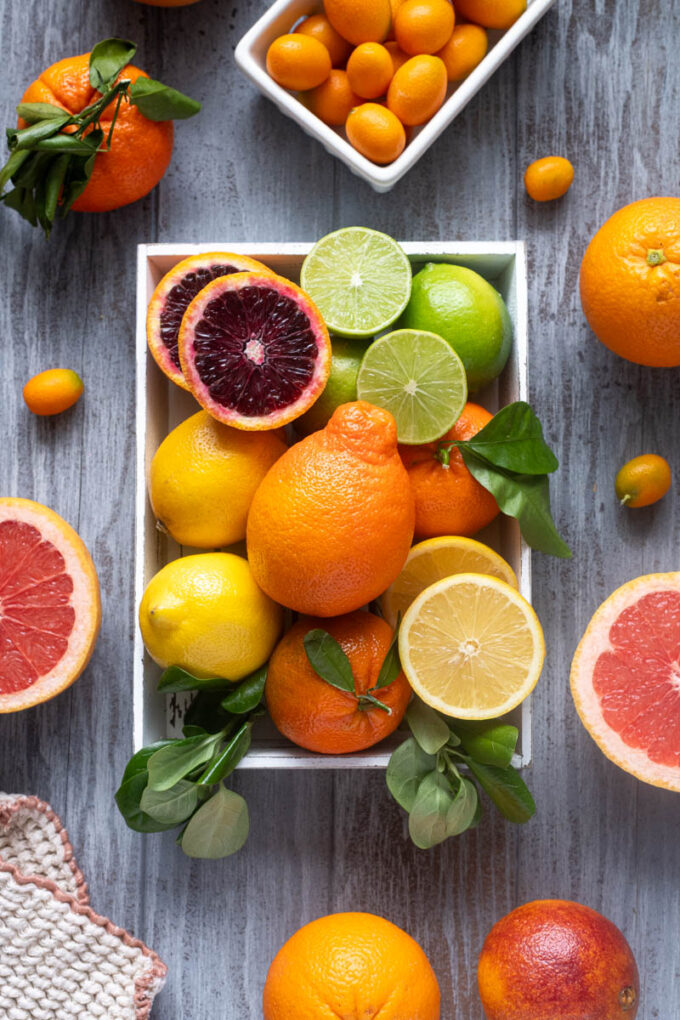
When Is citrus in season?
Most citrus varieties grown in the United States — particularly in California, Florida, Arizona and Texas — ripen from late fall through early spring.
While oranges, lemons and limes are available year-round, most varieties reach peak flavor during the cooler months, when they’re naturally sweeter, juicier and more aromatic.
Peak citrus season generally runs:
- November through April for oranges and mandarins
- November through March for Meyer lemons
- January through May for grapefruit
- Limes vary, but are often available year-round from warmer climates
During peak season, citrus develops:
- Higher natural sugar content
- More juice
- Thinner, smoother skin
- Brighter, more balanced flavor
For more seasonal produce highlights, see my January Seasonal Produce Guide, February Seasonal Produce Guide, and March Seasonal Produce
How to choose citrus
For the best flavor and juiciness, look for fruit that is:
- Heavy for its size (a sign of high juice content)
- Smooth and firm
- Vibrant in color
- Fragrant when scratched lightly
Avoid fruit that feels dry, light or overly soft.
How to store citrus
- Store at room temperature for up to 2–3 days.
- Refrigerate for up to 2–3 weeks.
- Zest citrus before juicing for maximum flavor.
- Freeze fresh juice in ice cube trays for later use.
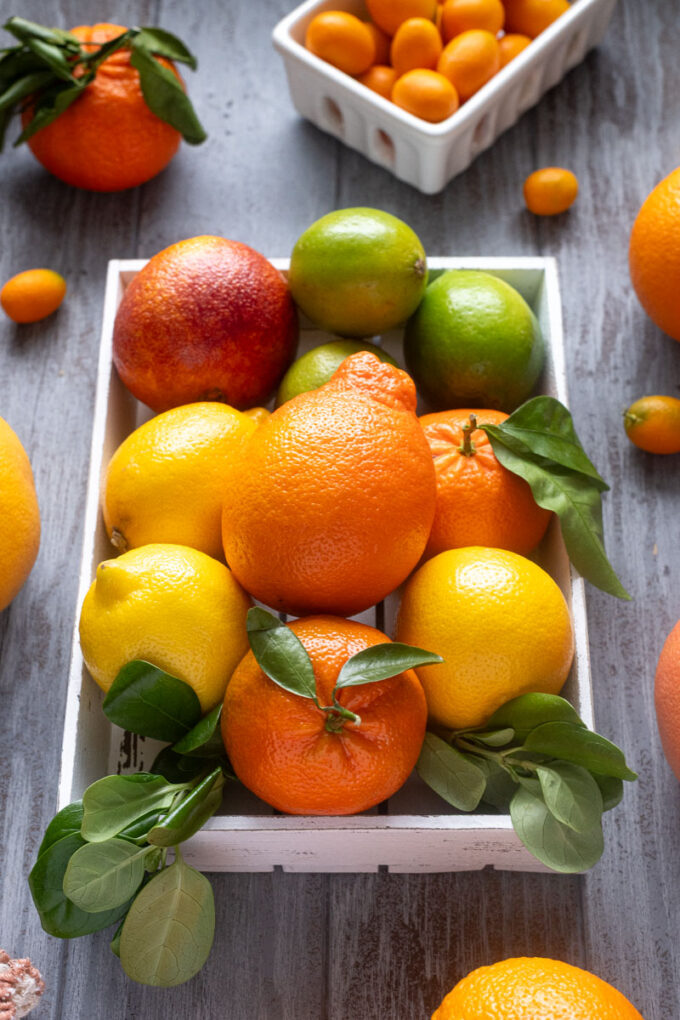
Recipes using citrus
Citrus enhances both savory and sweet dishes by adding acidity, brightness and natural sweetness. From simple vinaigrettes to baked desserts, fresh citrus juice and zest can completely transform everyday meals.
Savory citrus recipes
Citrus adds bright flavor to savory dishes whether it’s the star of a marinade, vinaigrette or sauce, or just a bit of fresh juice is stirred into a soup or stew at the end of cooking.

Easy Chicken Piccata Recipe

Ground Beef Enchilada Casserole

Lemon Dijon Baked Salmon
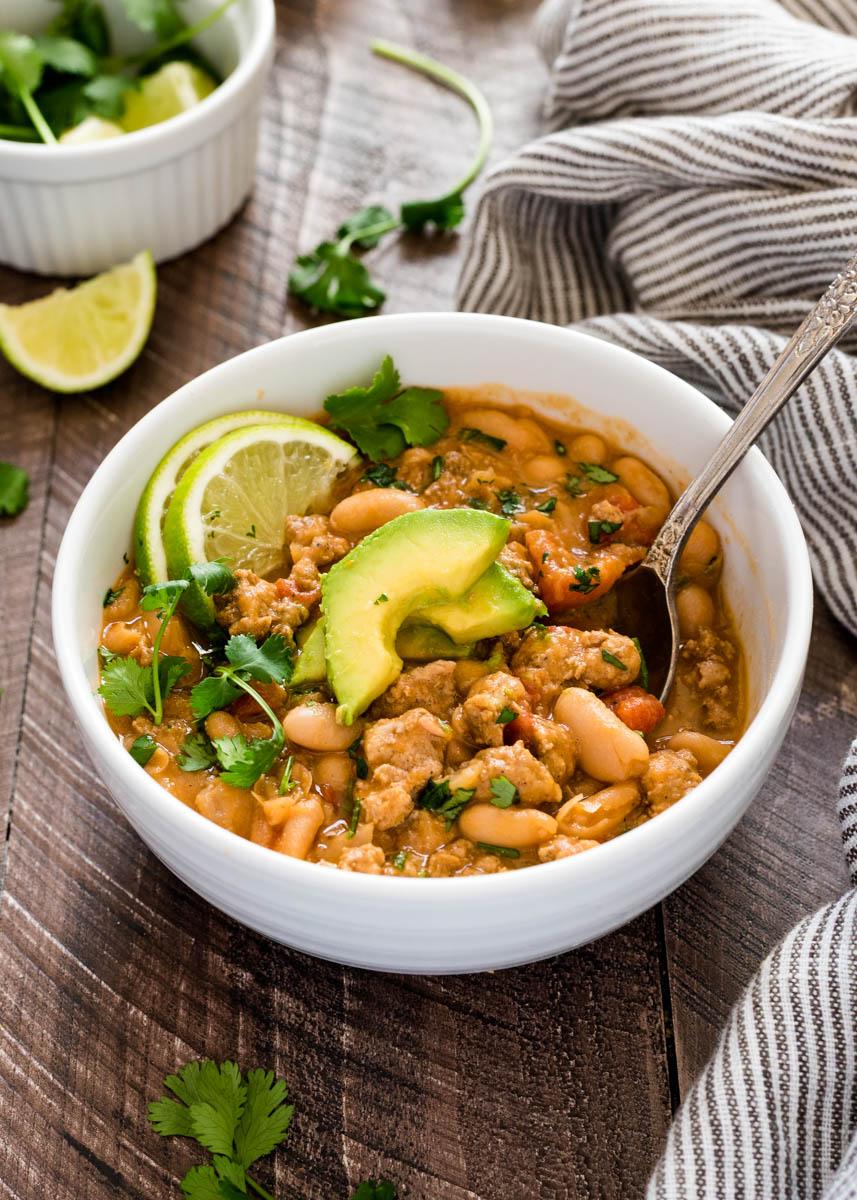
White Bean Turkey Chili

Slow Cooker Pork Carnitas
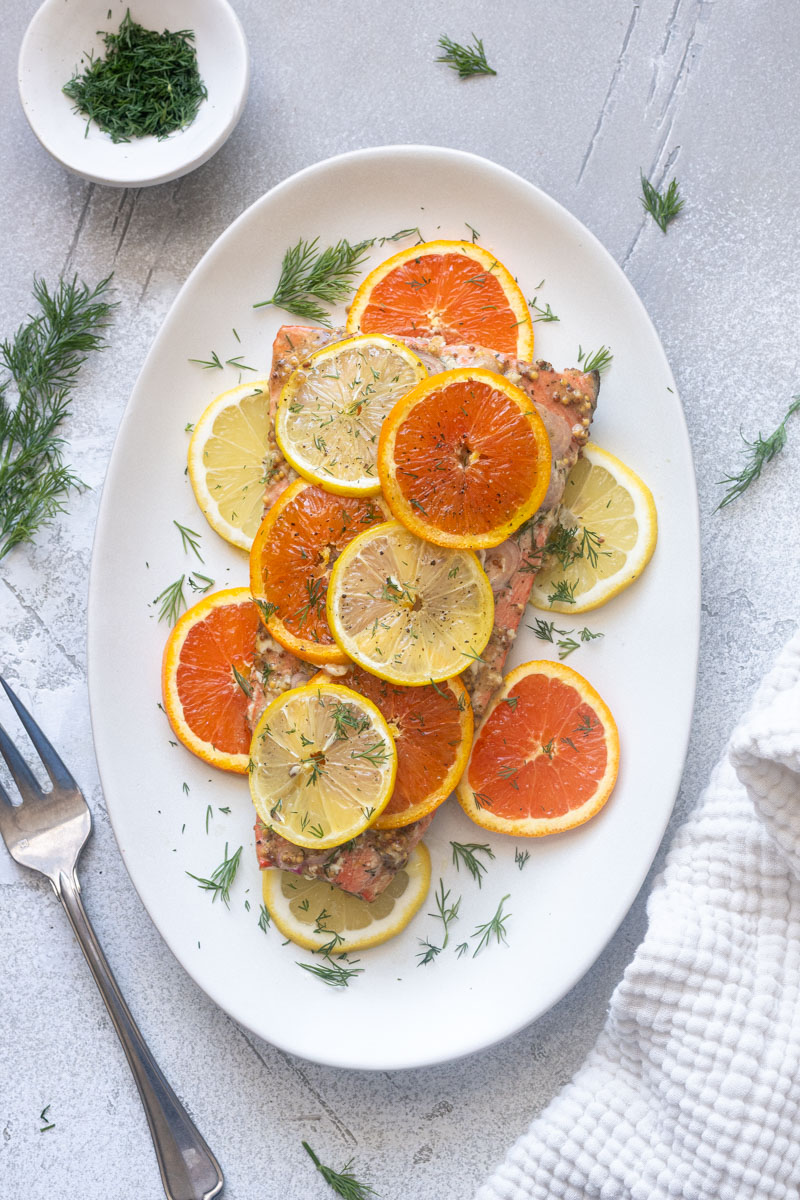
Slow Roasted Citrus Salmon

Slow Cooker Greek Lemon Chicken Soup
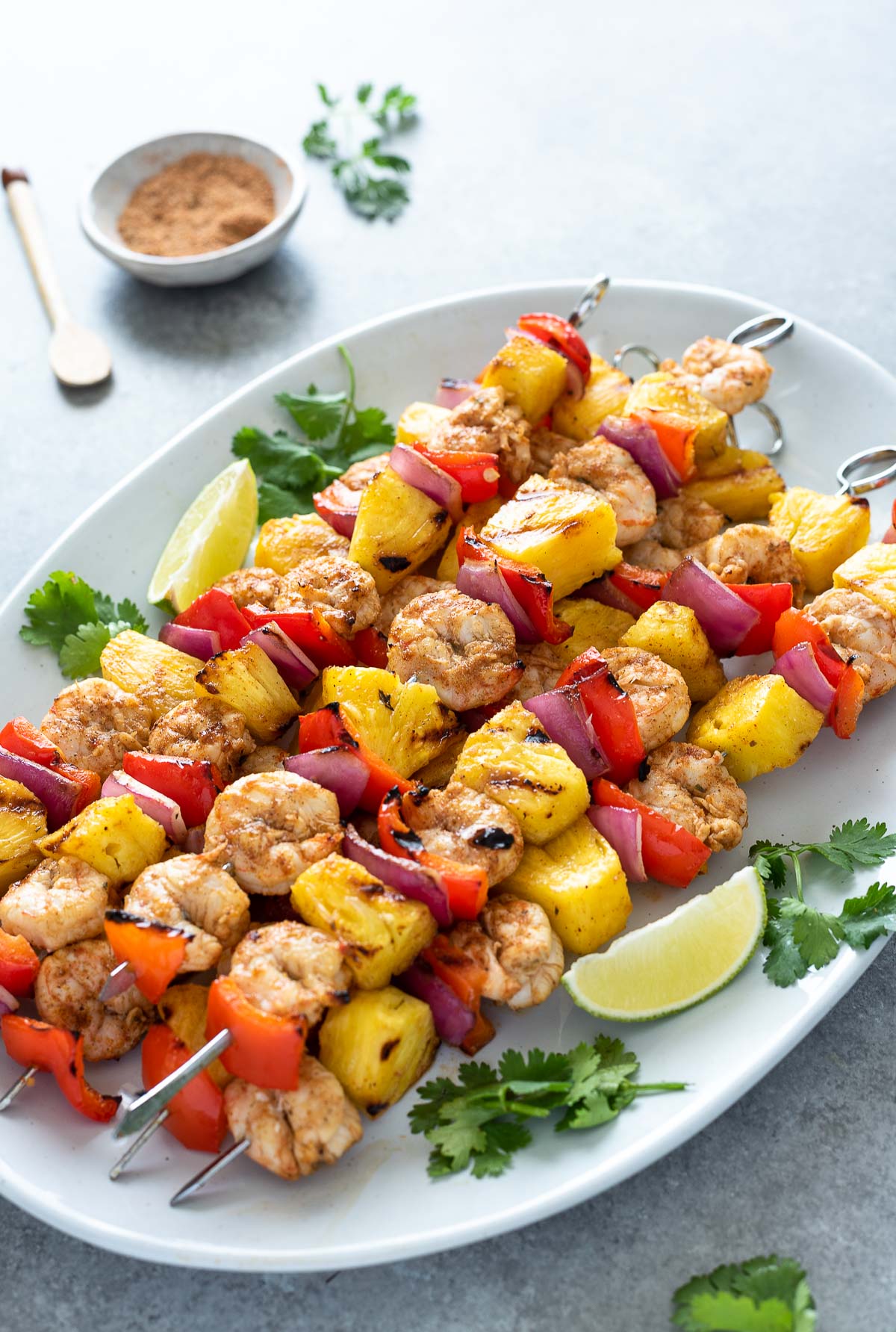
Jerk Pineapple Shrimp Skewers Recipe

Sheet Pan Chicken Thighs

Easy Shrimp Ceviche Recipe

Cilantro Lime Rice

Citrus Vinaigrette Recipe

Lemon Vinaigrette Recipe

Napa Cabbage Salad with Asian Dressing
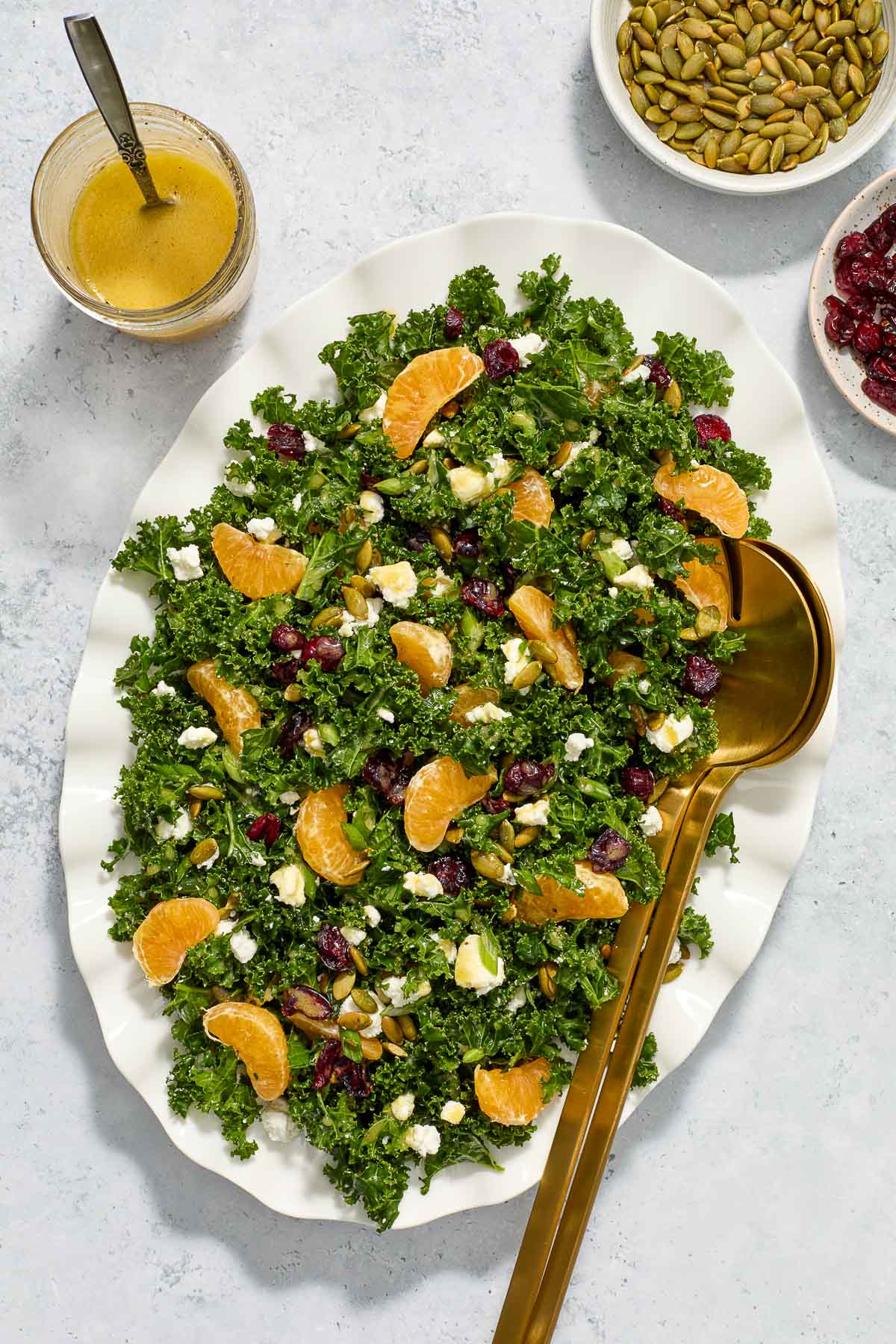
Kale Orange Salad with Goat Cheese

Frisee Citrus Salad
Sweet citrus recipes
Citrus shines in baking and desserts, where fresh juice adds brightness and zest intensifies flavor without adding extra liquid. From classic lemon bars to key lime pie, these recipes highlight the sweet side of citrus.
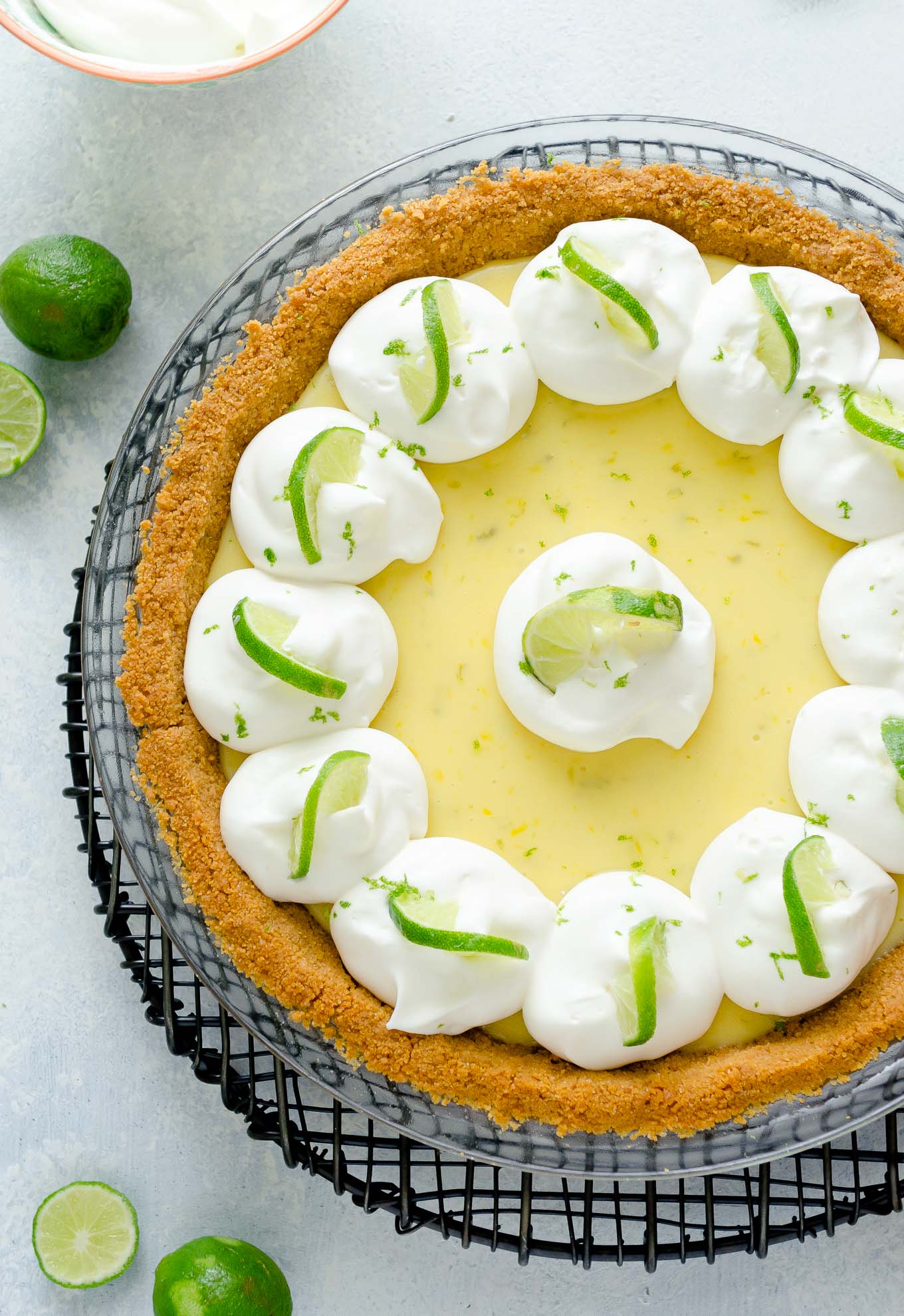
Easy Classic Key Lime Pie

Easy Lemon Bars Recipe
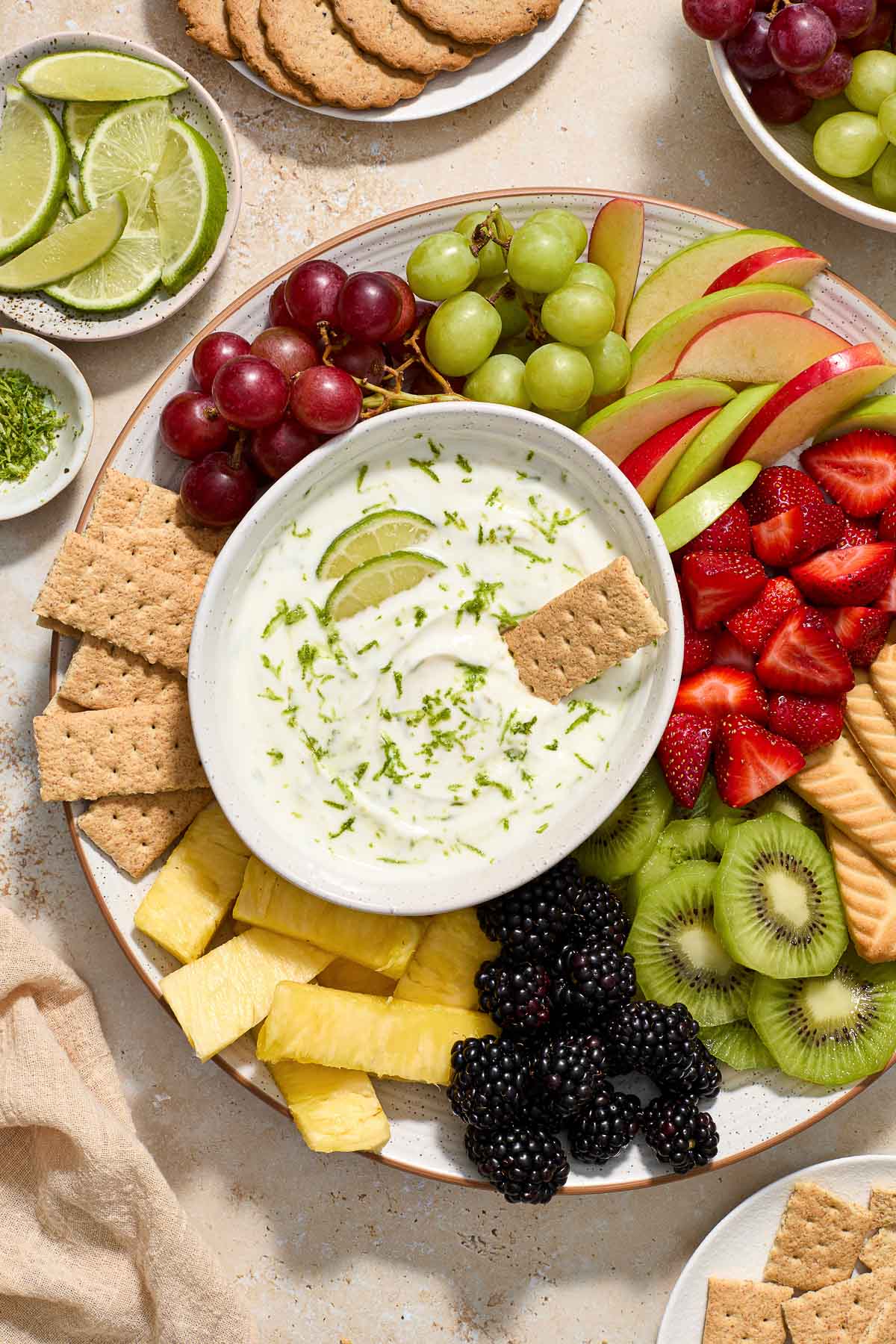
Key Lime Yogurt Fruit Dip

Almond Flour Lemon Loaf Cake

Key Lime Cooler Cookies
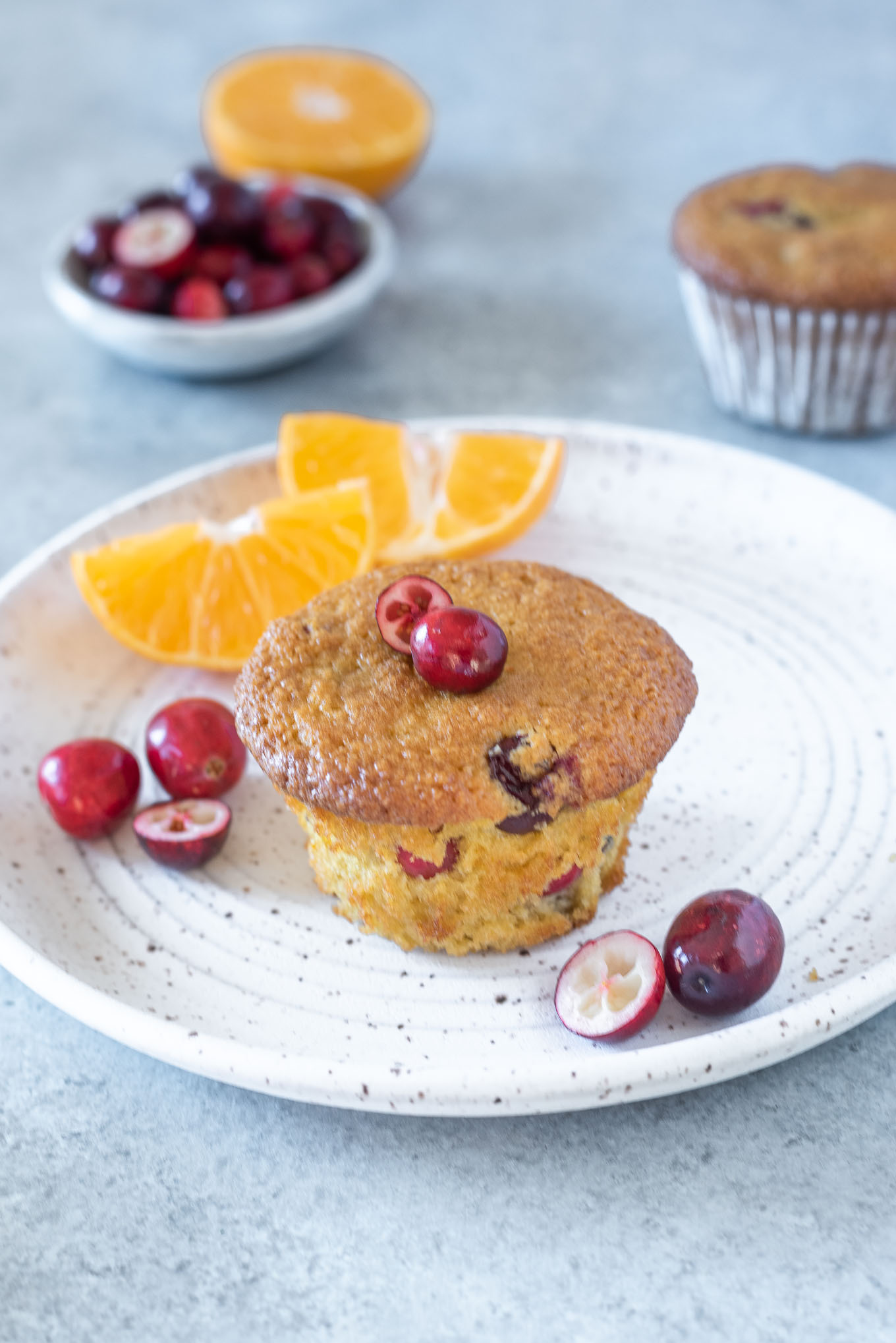
Healthy Cranberry Orange Muffins

Lemon Pudding Cake
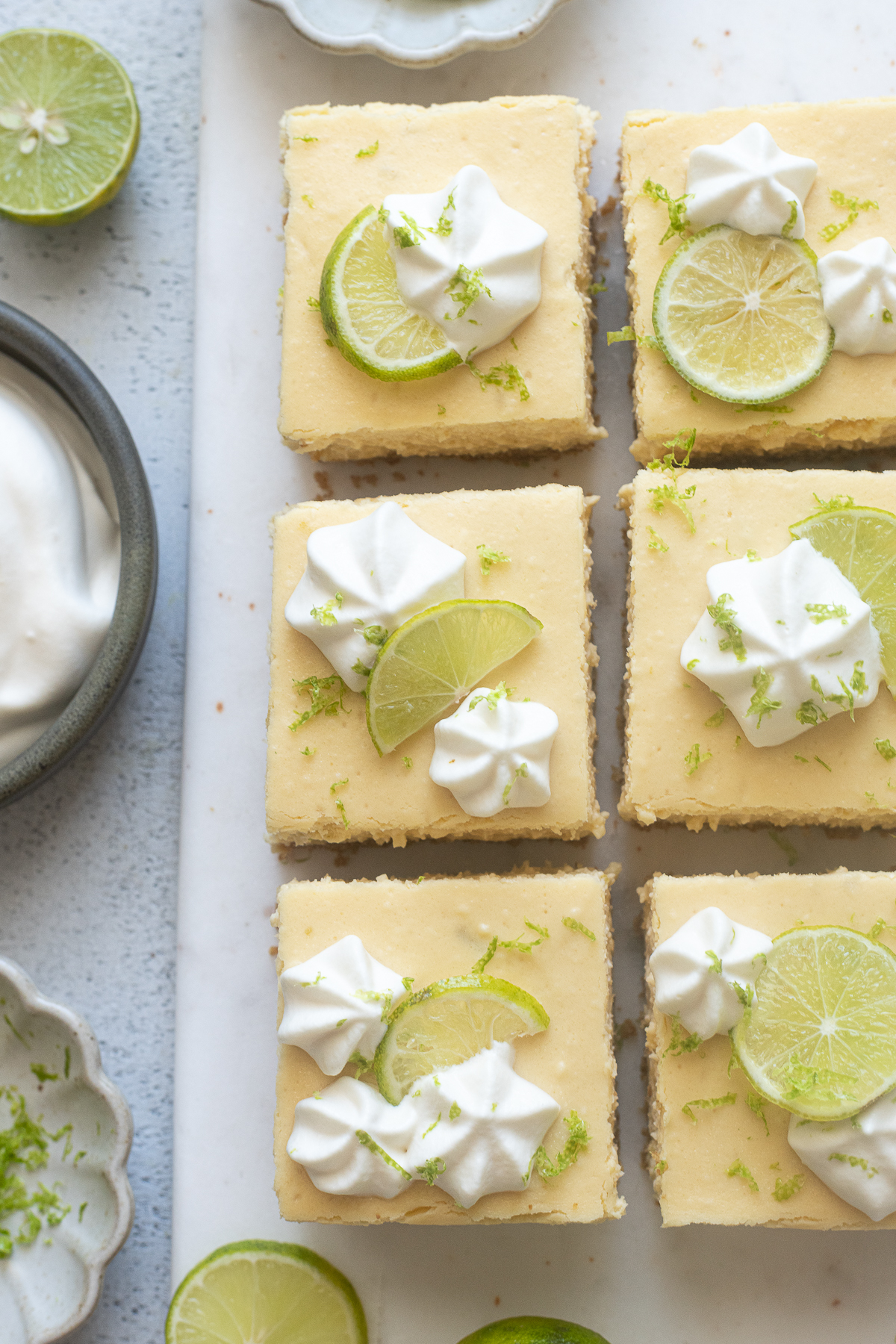
Key Lime Cheesecake Bars

Lemon Curd
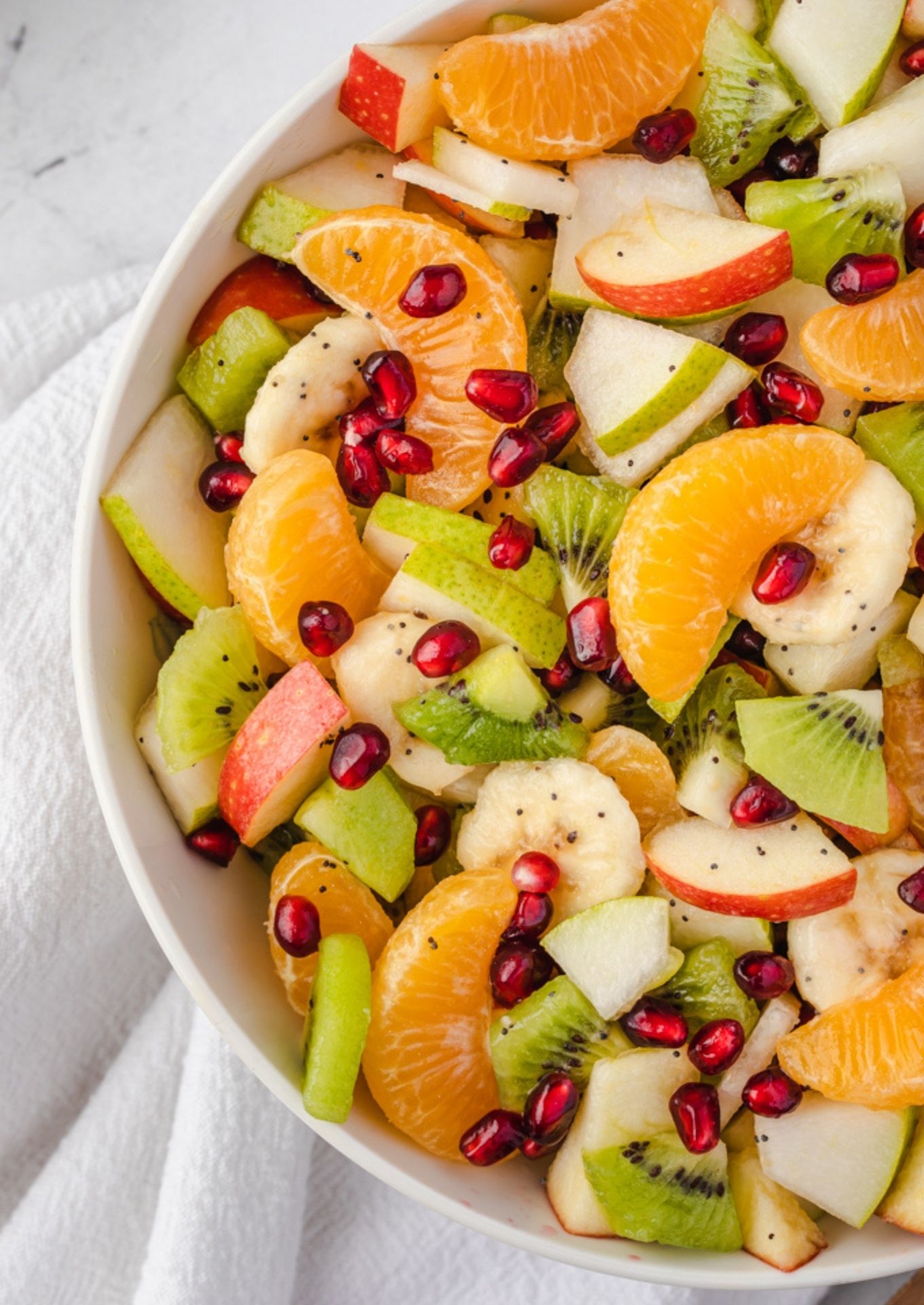
Winter Fruit Salad
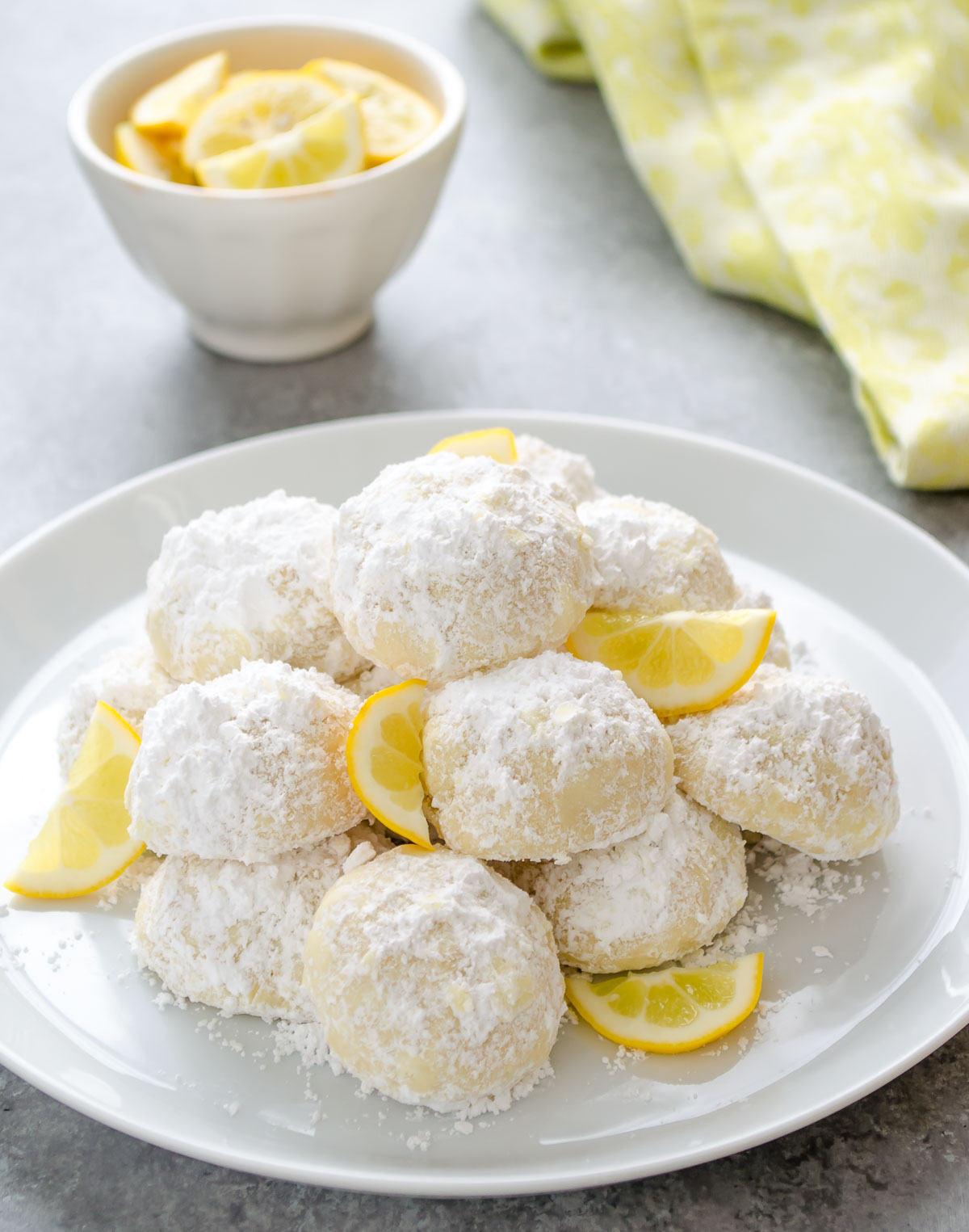
Meyer Lemon Greek Butter Cookies (Kourabiedes)
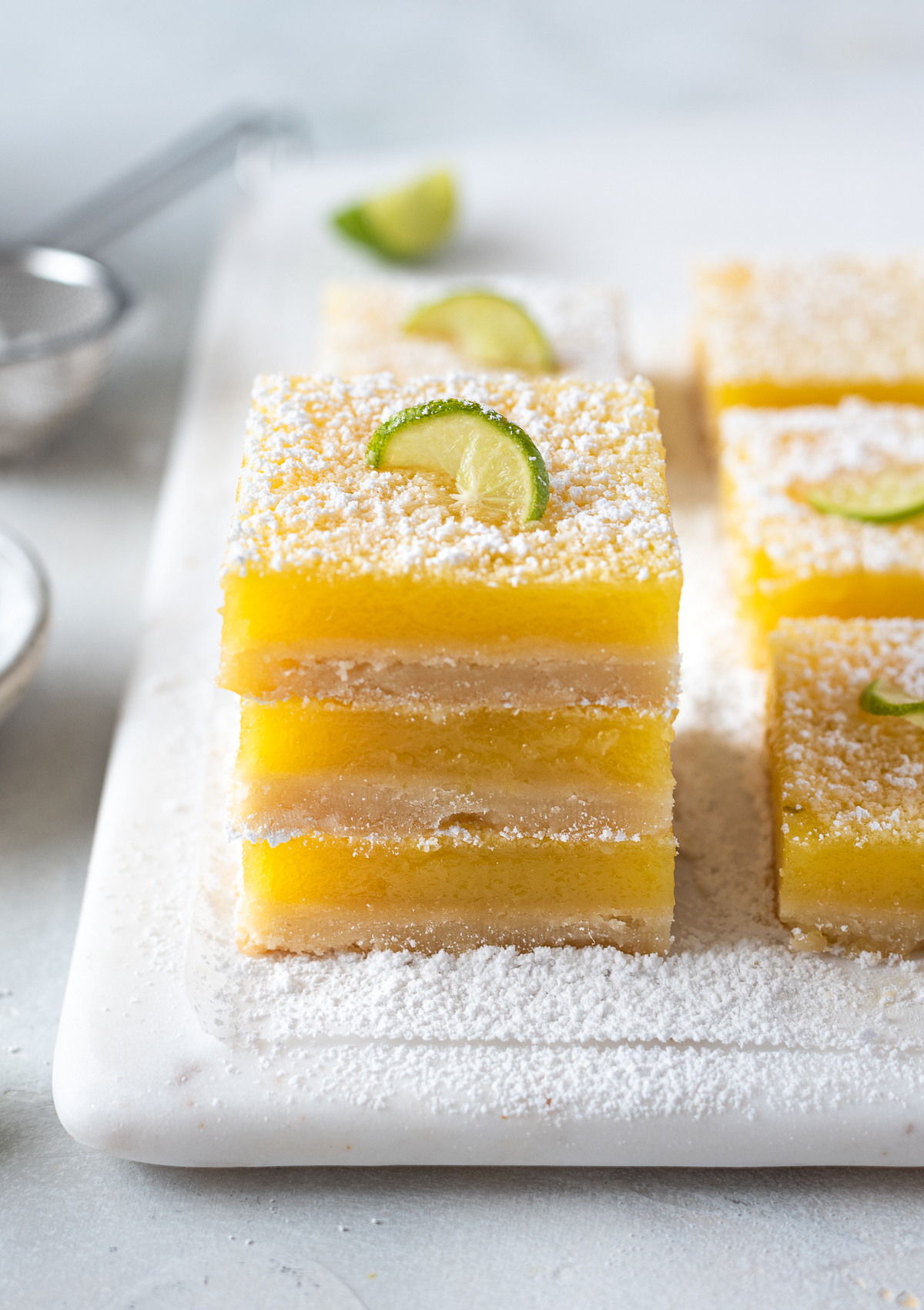
Key Lime Shortbread Bars Recipe

Persimmon Cake with Brown Butter Orange Frosting

Lime Curd

Mini Lemon Cheesecakes
Citrus cocktails and drinks
Fresh citrus juice elevates both cocktails and everyday beverages, adding balance and natural acidity. These drinks showcase how oranges, lemons, grapefruit and limes bring brightness to every sip.
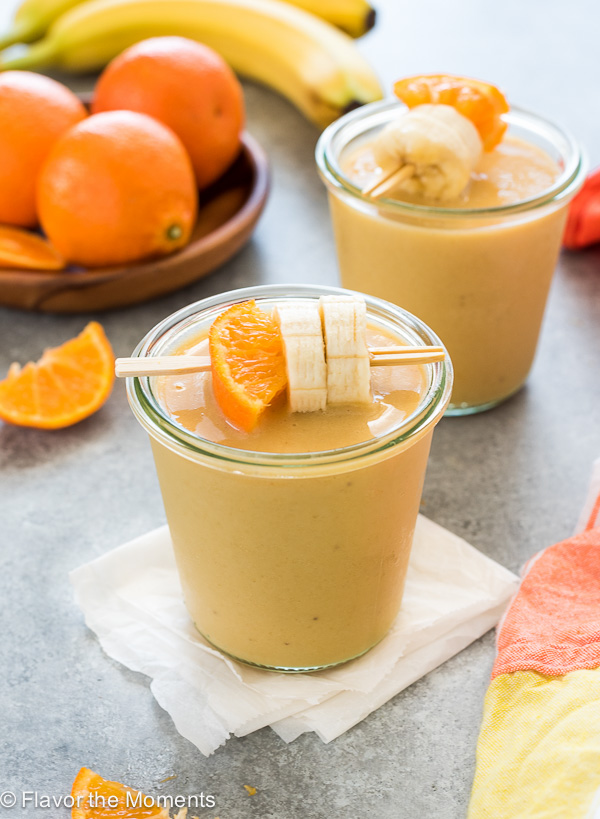
Orange Creamsicle Smoothie

Tropical Mango Kale Smoothie
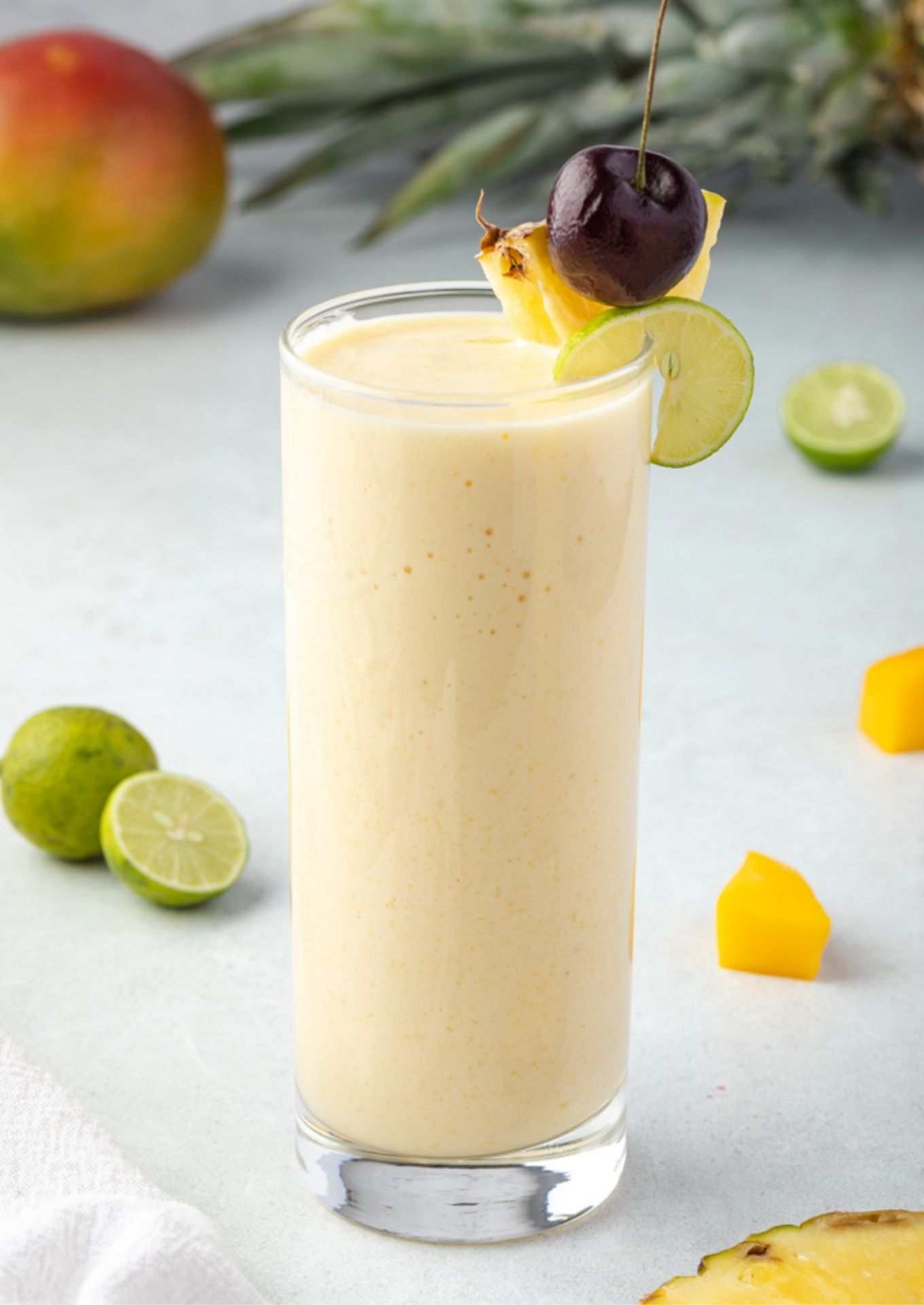
Tropical Smoothie Recipe

Peach Mango Smoothie

Strawberry Lemon Drop Martini
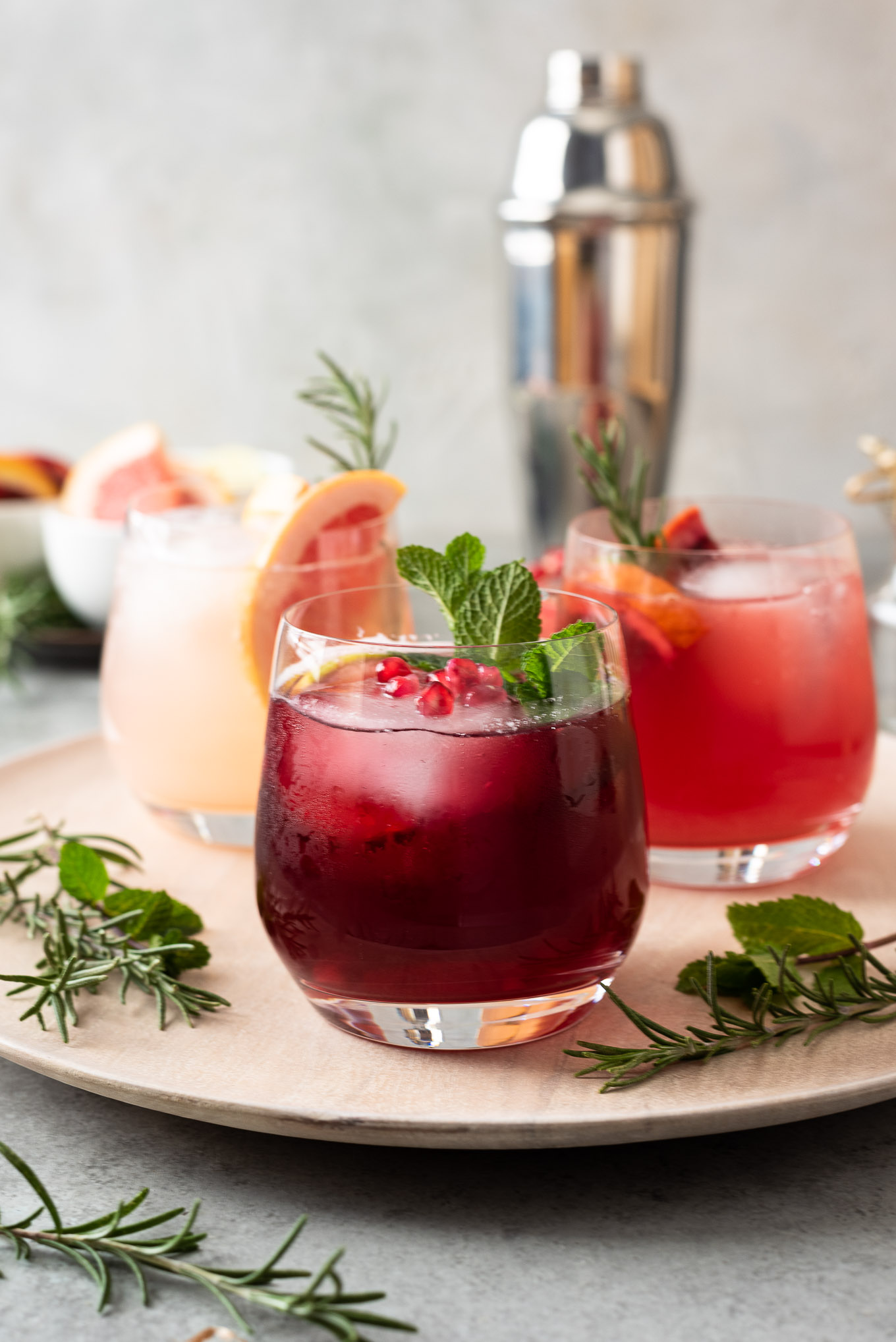
Easy Vodka Spritzers (3 Flavors!)
FAQs
No. While citrus is available year-round, most varieties peak from late fall through early spring when flavor and juice content are highest.
Meyer lemons are slightly sweeter, less acidic and more floral in flavor compared to traditional Eureka lemons.
Whole citrus can last up to three weeks refrigerated. Fresh juice should be used within 2–3 days.
Yes. Freeze juice in ice cube trays and transfer to a freezer-safe container for longer storage.
While citrus is available throughout the year, it truly shines during peak season when it’s naturally sweeter, juicier and more vibrant. Understanding the differences between citrus varieties — and how to use them — makes seasonal cooking easier and more flavorful.
Keep this citrus guide bookmarked as your go-to resource for cooking with citrus.
